Bar Deals

  • Subscribe to our RSS feed.
  • Twitter
  • StumbleUpon
  • Reddit
  • Facebook
  • Digg
Showing posts with label Health. Show all posts

Wednesday, 26 March 2008

Touchy Subjects: Confronting Loved Ones about Weight and Money Problems

Posted on 09:20 by Unknown
Even in 2008, there are certain issues Not Discussed – problems we don’t bring up, lest they cause discomfort or even worse, hurt feelings. Two of the biggest, that affect most of us in our day-to-day existence, remain weight and money. All too often, we’re reluctant to talk about our own health and fiscal situations, never mind voicing concerns about a loved one’s. Yet, despite our reluctance to broach the subjects, none of us want a brother who dies at 45 of a heart attack or a grandma who has to panhandle for tea.

So, what do we do when a friend or family member’s financial or weight predicament threatens to spiral out of control? What do you say to your 65-year-old father who puts on 100 pounds in five years? How do you tell your mom you can’t support her if she has no savings when she retires? Simply, how do we confront a loved one about a problem that could seriously affect his or her well-being?

The short answer: be honest.

The long answer: well, read below.

See, I feel that dire, near-emergency health and money circumstances necessitate action, and that confrontation is vital when the stakes are that high. We waste so much time pussy-footing around out of propriety and politeness when open, caring communication might actually solve the dilemmas at hand. You absolutely don’t have to agree, though, and I’d love to hear from readers with differing opinions. (Er … and similar opinions, too. I like being agreed with.)

But before we kick off the DOs and DON’Ts of confrontation, know I’m not a psychologist, nutritionist, or financial planner. In other words, I’m not qualified IN THE LEAST to give this kind of advice. It comes from a combination of personal experience, total speculation, and a few hours of research. Use at your own risk, and holy moly, please don’t sue.

DO come from a place of concern. Why are you raising the issue? Is it out of personal gain or of genuine love and caring? The answer to these questions will dictate much about how you proceed.

DO make absolutely sure you want to go ahead with this. Serious weight and finance conversations are not the kind you want to have off the cuff. Self-worth, vanity, addiction, personal responsibility, stress levels, history, habit, family, and peer pressure are just a few of the exciting issues that can play into the discussion. If you’re willing to deal with them – aces. If not, perhaps there’s another solution.

DO consider approaching as a group (or at least taking a consensus). When multiple friends or family members raise an issue with a loved one, it can emphasize the urgency of a message and make it clear that more than one person sees the problem. (Strength in numbers and all.) However, before you sit down and talk, ensure that the group is all on the same page, with the same concerns and same positive solutions. You never want to dogpile on someone who’s probably already pretty down about herself.

DON’T cry wolf. A ten-pound gain and/or $200 debt aren’t tragedies. It’s when someone’s health or well-being are in serious danger you might want to raise a red flag. Calling out a minor bump in the road can cause resentment and make you seem like a busybody.

DON’T wait until the last minute. If you are truly concerned about someone’s weight or fiscal situation, the time to make your point isn’t during her foreclosure or his third bypass surgery. Voicing worries early can help prevent obstacles down the road.

DO time it right. Holidays and major life events cause enough stress as it is. Piling on, “Bro, I’m concerned about your six-figure credit card balance” won’t help. Pick a low-key afternoon or quiet lunch to start the conversation.

DON’T assume they don’t know already. Odds are that someone deep in debt or seriously overweight is 100% aware of his situation. What’s more, realizing that others are conscious of the predicament can be severely embarrassing. That’s why delicacy, sensitivity, and caring are the names of the game.

DO consider consulting a professional. If you’re feeling nervous or lost about where to begin, a therapist, doctor, or clergyperson can guide the way.

DO rehearse the conversation. Rushing into important talks without a clear idea of what to say can leave all participants confused and angry. Think about your message. Frame it honestly and positively. Practice delivering it in the kindest tone possible. Anticipate responses. This isn’t a debate, but going in with all your ducks in a row can only facilitate dialogue.

DON’T be judgey. You are not the moral authority here. Casting aspersions or telling someone her behavior is a result of personality failure can make her defensive, angry, and/or sad. Justifiably so. It also makes you a jackass.

DO be honest. Voice your concerns openly and kindly. Listen. Ask questions. Answer questions. If the situation affects you – like if your parents are flat broke and on the verge of retirement – say it.

DO speak wisely. Your choice of words could dictate everything about how the talk is going to go. “You’re an idiot with money!”/”Your behind is bigger than the sun!” will not get the discussion anywhere. Avoid insulting language.

DO use lots of “I” sentences. Relying on your own experiences is a great segue into talking about a loved one’s. Try it: “Ma and Pa, I recently became super-interested in my 401K. It’s really neat. How do you guys do yours?” or “Sis, I have a really hard time maintaining my weight. Can I talk to you about it?”

DO expect resistance, but take it in stride. “It’s none of your business,” “I’ll never lose 100 pounds,” or “Don’t you have your own money problems, Miss Unemployed Since Christmas?” are just a smattering of the exciting defensive responses you can anticipate when confronting a loved one about a major issue like this. Don’t take it as a personal attack. Accept it, make your points gently, and keep moving.

DO understand extenuating circumstances. Did this person just have a baby? Did someone close to her pass away? Did he have a car accident? Major life changes can have a profound impact on financial and physical health. Sometimes, they’ll take a lower priority to just getting through the day alive.

DON’T harp on it. Nagging gets no one anywhere, ever. I think my sister still smokes purely because I yell at her every time she does. Make your point and move on.

DON’T expect instant results. Understand that people change when they want to, not when you want them to. It’s one thing to express concern, it’s another to demand immediate satisfaction.

DO take baby steps. If your loved one is on the same page, offer assistance, and help them make incremental changes. Rome wasn’t built in a day, or even 40 days. It probably took decades, and even then, it wasn’t perfect. Weight and finance problems can take entire lifetimes to build up, and need additional days, months, and years to get better. Any progress is good progress.

And that’s it. But I’d love, Love, LOVE to hear readers’ opinions on this. Have you had to speak to a loved one about their weight or money? What did you do? How did it go? Have you tried any of these strategies? Did they work? What would you change for next time?
Read More
Posted in Do-Gooding, Health | No comments

Wednesday, 5 March 2008

Finance, Food, and the Role of Personal Responsibility: A Question for Readers

Posted on 09:16 by Unknown
I’d like to depart from the usual Wednesday-type articles today to pose a question to everybody out there: when it comes to diet and finance, how much do you think personal responsibility factors in?

I’ve been thinking a lot about this lately, but it really picked up steam after dinner with my sister L. We struck up a conversation about money and food, since we’ve both been in debt and slightly overweight. I asked L if she thought there was a connection between the two. She answered with preternatural wisdom:

“When you’re resigned to the fact that you’re going to owe money, it doesn’t matter how much. When you’re resigned to the fact you’re going to gain weight – same thing.”

She’s right, too. When a situation becomes inescapable and oppressive, it often doesn’t matter how much more is piled on. To borrow a psychiatric term, we usually have to hit bottom before we actively decide to change. But how does this happen in the first place? Is it societal pressures? Or our own lack of awareness?

To read Maxed Out, James D. Scurlock’s treatise on the predatory credit industry, you’d think that we’re all being victimized, and debt is as culturally ingrained as closing our mouths when we chew. Undoubtedly, there’s some truth to this. Banks, credit card, and loan/mortgage companies make it their goal in life to profit from us as much as possible, whether or not we can actually afford it. They target us with advertising from birth, and all too often, exploit the uneducated and poor to bulk up their bottom lines. What’s more, the business of money is difficult to navigate, and it’s only getting harder. It’s easy to see why anyone could give up – why anyone just wouldn’t want to know – and I think the same principles apply to food marketing and weight.

On the flip side, many (if not most) finance and food blogs claim that personal responsibility is all you need to get by. Taking control and informing yourself will overcome negative cultural influences, a.k.a. those industries which profit from your increasing debt/waistline. In terms of programs that promote this concept, none are brought up more than Weight Watchers and Dave Ramsey’s Financial Peace University.

If the internet is to be believed, Dave Ramsey is second only to FDR in rescuing Americans from financial ruin, while Weight Watchers has turned a nation of 500-pound Krispy Kreme devotees into an army of lean, fit triathletes. (Slight exaggerations both, but you get the picture.) I believe this is because they do the following:
  • Emphasize permanent lifestyle and behavioral change over temporary band-aids and quick-fix scams.
  • Give people the information and tools to make changes.
  • Ask people to take responsibility for their actions.
Admittedly, both Dave and WW have worked for me. And that colors my opinion.

I think weight and money have everything to do with personal responsibility. I think being unaware of what went into my mouth and came out of my wallet held me back in lots of ways. I think I can’t blame profit-driven industries for anything when I willingly bought into what they were selling me, without looking any deeper.

Of course, this doesn’t apply to everyone. I’m a middle-class, semi-educated white girl with no kids and no mortgage. My realm of experience is incredibly limited, which is why I’m VERY interested in opinions from readers. Assuming that weight and money are tied together...
  • How much does personal responsibility factor in?
  • How much do outside/industry pressures factor in?
  • Do you have a good story?
  • What are the solutions to either problem (obesity and/or debt)?
Comments are wide open, and I’d love to get a discussion going. Thanks for reading.

(Photos courtesy of smallbiztechnology.com, daveramsey.com, and jupiter images.)
Read More
Posted in Do-Gooding, Health | No comments

Wednesday, 20 February 2008

Food, Frugality, and Fighting Brand Loyalty

Posted on 09:11 by Unknown
I have a confession. I’ve been writing CHG since last July, yet cooking healthily and staying on budget remain constant struggles. Though I’m learning, and hope you’re enjoying the journey, I’m ultimately not an expert chef, dietician, or personal finance guru.

But I am a media professional. And I know a little bit about advertising. And I know that the brass ring of every ad agency in existence is brand loyalty. And I know that brand loyalty can cost a food shopper (you, me, us, etc.) a lot of cash.

Today’s article focuses on that phenomenon. What is brand loyalty? When does it start? Why is it less than great? How can it be tamed? You might find the piece a bit drier than most CHG posts (in which case, pace yourself by periodically checking into Cute Overload), but it could also be the most important one yet.

(Did that sound good? Yeah? Okay, cool. Let’s get started.)

What it is
Simply, brand loyalty occurs when a consumer uses a product or service over and over again, because A) it works for her, B) it’s habitual, and C) she’s hesitant to spend cash on the unfamiliar. For example, when I buy orange juice, it’s Tropicana, and it has been for as long as I can remember. My mom always bought it, and from what I recall, her mom did, too. I rarely purchase other brands, because it’s been imprinted on my brain (through personal experience and tons of advertising) that they won’t taste as good as Tropicana.

When it begins
One of the most eye-opening moments of my professional career occurred about five years ago, when I had a meeting in a room just used by Nickelodeon. If you’re not familiar with Nick, it’s a television channel whose major target demographic is children between the ages of 4 and 11. One of their employees left a marketing presentation printout on the conference table. In it, kids (again, ages 4 to 11) were referred to as “consumers.” Yikes.

Like Nick, many (if not most) corporations start building consumer brand loyalty from birth. (It would begin at conception if zygotes could read.) Advertisers spend billions of dollars each year to promote directly to toddlers and school-age children through magazines, television shows, movies, clothes, billboards, music, commercials, and … well, you name it. The earlier marketing begins, the more ingrained the product is, and the longer those kids will be customers.

In fact, the National Institute of Media and Family estimates that “Children as young as age three recognize brand logos, with brand loyalty influence starting at age two.” If anyone has a little girl obsessed with Disney Princesses (as many of my mom-friends do), you know what they’re talking about.

Why it costs you more
Once you become loyal to a brand, that company counts on your repeat business throughout the course of your lifetime. As a result, prices can be jacked up because it’s assumed you’ll continue to pay a premium out of allegiance. What’s more, you’ll ignore competing items, no matter what advantages they present. Wikipedia puts it best: “For example, if Joe has brand loyalty to Company A he will purchase Company A's products even if Company B's are cheaper and/or of a higher quality.”

Think of it this way: there are three types of oatmeal on sale - Quaker, McCann’s, and Generi-oats. They contain mostly the same ingredients, and are essentially the same shape, color and consistency. Quaker goes for $3 a box. McCann’s is $2 after a coupon. Generi-oats runs a mere $1.50. Since it’s habit and your dear ol’ Dad always did it, you buy Quaker without thinking twice. You’re down at least $1.50 because of brand loyalty.

Now, multiply that $1.50 by the number of items in your shopping cart. How much does brand loyalty cost you per trip? Per month? Per year?

What does this have to do with the “Healthy” part of “Cheap, Healthy, Good”?
Well, advertisers throw a LOT of resources into marketing processed food, meaning you have a better chance at becoming brand-loyal. Those products are generally less nutritious than whole foods like meats, produce, and dairy, which aren’t pushed as hard in commercials and print ads. So, not only do brand-name processed foods cost more, they can crowd fresher, healthier foods out of your shopping cart.

How to fight it
While advertising and some brand loyalty are nearly impossible to avoid, there are steps you can take to minimize their influence:

EVERYDAY LIFE: Flip off the TV. Mute commercials. Try to minimize advertising found around the home. Don’t prioritize brand names, especially in front of kids. Promote media literacy. Stress variety and try new things.

FOOD: Buy generic. Experiment with brands besides the ones you regularly use. Shop with coupons, which offer savings on a different brand each week. Use the circular, which varies discounts throughout the year. Cook from scratch. Purchase foods found around the perimeter of the supermarket. Cut back on brand-based cookbooks.

A caveat
You know what? Though they’re nearly twice the price, I find Ghirardelli chocolate chips tastier than Nestle. Inarguably, they make my cookies better. I’ve developed a brand loyalty to them. On the same note, I’m highly hesitant to switch my contact lens solution. Other products dry out my eyes, and I have an annoying habit of walking into sharp things when I can’t see.

There’s nothing wrong with brand loyalty if a product works for you, especially if you’ve tried the alternatives. It’s when that devotion is uninformed and automatic there can be an issue.

In the end
Brand loyalty isn’t catastrophic, and it won’t ruin any lives or hopes for the future (like say, smoking or riding the M Train naked). While it can be costly, both nutritionally and wallet…ally, knowing the facts and shopping smart is a stellar way of addressing concerns. If you’re interested in learning more, check out these resources:
  • Answers.com provides a deeper explanation of brand loyalty.
  • For hardcore shopping statistics, there’s this About.com article, and more from the Grocery Manufacturers of America.
  • For lots of somewhat frightening information on kids and advertising, check out the National Institute on Media and Family’s fact sheet.
(Photos courtesy of Global Package Gallery, The Wooden Porch, and Flickr member aqualilflower.)
Read More
Posted in Buying Food, Frugality, Health | No comments

Wednesday, 23 January 2008

The Case for Frozen Food

Posted on 09:24 by Unknown
As I begin this post, I’m enjoying a highly delicious, unusually nutritious homemade mixed berry smoothie. Normally, the cost of making such a drink in mid-January is prohibitive, with fresh berries running up to a dollar per ounce. But if you order a similar smoothie at a place like Jamba Juice? At four or five bucks a pop, you may as well blow your nose on Abe Lincoln.

Enter Trader Joe’s bag o’ frozen strawberries, blackberries, and blueberries. For a mere $2.99 you, too, can procure a pound of sweet, juicy produce that tastes almost as good as the day it was wrenched from a vine. Throw in some low-fat yogurt, a little light soy milk, and a dash of honey, and *poof*. It’s manna in an glass for less than half the price of the Jamba shake.

When it comes to whole fruits and vegetables, fresh is nearly always preferable to frozen. Yet, there are circumstances in which iced goods have clear benefits. An affordable blueberry smoothie in the dead of winter is just one example.

Nutritionally speaking: frosty fare retains most of its vitamins and minerals because it’s flash-frozen soon after being picked. In some cases, frozen eats may actually be healthier than fresh, since they’re not artificially ripened, shipped long distances in precarious containers, or left laying around to wilt. More on that here.

Financially speaking: I bought a pound of mixed, chopped bell peppers for $1.29. Fresh green bells were going for $1.49/lb at Key Food, and red and yellow peppers for much more than that. Frozen produce can be a massive bargain, especially because supermarkets seem to run specials almost every week.

Culinarily speaking: home cooks get pretty tired of potatoes, apples and winter squash after a few months. A variety of iced goods counters the boredom. Yeah, the quality can waver (greatly … oh, so greatly), but y’know – the spice of life and whatnot.

Conveniently speaking: chilled fruits and veggies are on par with zippers and the invention of the wheel. Produce will last for months in a freezer and can be purchased in giant, hulking bags. Sure, there’s some thawing time, but overall, the handiness is hard to match.

Flavor … uh … ly speaking: preservatives are kept to a minimum, since the cold acts as a safeguard against the elements. What’s more, food is given a chance to ripen before it’s packaged, meaning it'll taste better than that suspicious February chile.

It’s worth noting that lots of processed frozen entrees don’t meet these criteria. For every semi-healthy Amy’s Kitchen shepherd’s pie or Lean Cuisine panini, there is a slew of artery-clogging Hot Pockets, Hungry Man Hearty Breakfasts, and TGI Friday’s mozzarella sticks. The calorie counts in these foods can reach four digits, never mind the fat and sodium levels. For the sake of convenience, it might be difficult to cut them out entirely, but don’t forget to read the nutrition labels before you buy.

Also meriting a mention is the environmental impact of mass-produced frozen foods, which is … hard to quantify. Freezing a string bean consumes a lot of energy. Keeping it cold uses even more. However, you do save precious food miles by avoiding imported off-season goods. (See? Hard to quantify.) To reduce the negative effects on the atmosphere, try to buy the majority of your produce fresh, in-season and/or organically-grown. Or? Grow and freeze your own fruits and veggies. The Earth will thank you.

That’s it for me (I have a smoothie to finish), but if you’re interested in reading more about the glory and magic of whole frozen foods, these resources will do quite nicely:
  • Good Housekeeping has a great article about choosing the best-quality and healthiest frozen food. (Including a graph! Graphs are our friends.)
  • If you absolutely have to eat a prefab frozen meal, this MSNBC piece will help you choose the right one.
  • WebMD says everything I just did, only with way more medical degrees to back it up.
  • Finally, to find out how long that cauliflower is gonna last in the icebox, check out Health Recipes.
Read More
Posted in Buying Food, Frugality, Health | No comments

Wednesday, 16 January 2008

Cheap Healthy Vacation Food Part Deux: 10 More Tips for Travel Eats on a Budget

Posted on 07:16 by Unknown
A few months ago, I wrote Cheap Healthy Vacation Food: 61 Tips for Travel Eats on a Budget, an extensive article about the 2004 Red Sox. (Kidding. The title’s pretty self-explanatory.) My recent India experience has given me a little more insight into the subject (including the wide, wonderful world of jet lag), so I thought I’d revisit the piece to add a few suggestions.

My limited range of experience might not be enough, though, so if y'all have time, I’d love a few ideas from readers. If there are enough new ones, I’ll publish them in a third article (Oo! A Threequel!) sometime in the near future. Together, we can create a vacation food guide the fine folks at Frommer's would envy.

That said, let’s get to it. Here are some more salient points for travelers who eat. (Which is all of us, no?):

1. Read at least one guidebook from cover to cover. The Lonely Planet series contains extensive text and background on local cuisine, while the DK books include pictures and terminology. Both have restaurant suggestions for all budgets and diets, and I’ve found the referrals to be pretty decent (especially Lonely Planet). Wikitravel and TripAdvisor are two other excellent sites for ideas.

2. Bring a portable guide (with pictures if possible) of foods native to your destination. This goes double if you’re visiting a country that speaks an unfamiliar language. Case in point: two years ago, I visited Barcelona with my family. I (repeatedly) ordered what I thought was pasta, and was (repeatedly, because I’m an idiot) surprised when it turned out to be something else. Knowing your cannellini from your cannelloni and your channa from your chai can save your cash and your digestive system.

3. Research health concerns before you go. Unless they’ve built up immunity like Westley did to iocane powder (Princess Bride, represent!), Westerners will become super-sick if they chug Indian water. (Hello there!) In fact, any unfamiliar cuisine or drink can mess with a visitor’s gastrointestinal tract. Before you go abroad, check up with the CDC on food and beverage restrictions. Taking some Immodium, Pepto, or an antibiotic along on the journey is good insurance, too. You’ll lay down some dough up front, but it could prevent lost vacation days or even an expensive trip to the ER. (Don't freak out, though. Most vacation destinations are just fine.)

4. Beware of tourist traps and commission scams. Tourist-oriented restaurants can charge up to three times what you’d normally pay for the same food somewhere else. Plus, in India at least, some restaurateurs give kickbacks to cabbies and drivers that bring foreigners to their eateries. Guidebooks and websites will have specific information about these, so read up.

5. Ask an expatriate. Our first day in Delhi, we ran into Ann, a French woman who moved to India in 1992. She spoke perfect English and Hindi (and French, duh), and knew India’s food customs and rituals way better than we ever could. Her suggestions were invaluable, and we ended up seeing parts of the city we wouldn’t normally have seen otherwise. The Anns of the world are faboo resources, and if you're lucky enough to stumble upon one, bask in her wisdom.

6. Know cultural mores relating to food. Are you eating with the correct hand? Should you tip an Irish bartender? Would you suggest Fuddruckers to a Hindu? These are questions world travelers must ask themselves before they hop on that plane. Being prepared culturally is just as important as being ready physically and financially. Otherwise – international incident! And no one wants to be caned.

7. Carry bottled water. Normally, I regard bottled water as a scam on par with triangle schemes and the Teapot Dome Scandal. However, it could be a good idea to carry an Evian around when you’re A) sightseeing, B) a little woozy, or C) unsure about the tap water. Hydration is important, when and wherever you are in the world.

8. Take steps to alleviate jet lag. Oh dear god, I did NOT fully comprehend the seriousness of jet lag before going away, and it kicked my butt from here to Tallahassee. The last five days are a nauseous, slap-happy blur. I’m okay now (finally), but besides exercising, taking melatonin, and adjusting my sleep schedule, I should have drank more fluids, avoided alcohol and caffeine, and maybe even considered the jet lag diet. For more information, see WebMD or the aptly titled No Jet Lag site.

9. Purchase food souvenirs from reliable sources. This tip actually comes from an anonymous reader. He/she says: “Be careful of buying spices abroad especially from markets - there is little or not regulation - and sometimes there can be nasties in them.” I’m itchy just thinking about it, so if you do shop for edibles, make sure the store is reputable and clean. Also, remember to check if the food’s even allowed back through Customs. Otherwise, this can happen.

10. Know the currency conversion rate. While this tip is relevant to all overseas expenditures, it’s especially important with food. It’s pretty easy to blow six pounds or 400 rupees on a beer, because the dough you (I) hand over is different from what you’re used to. Psychologically, it’s like Monopoly money. But when you (I) get home and discover you (I) blew $10 on a Kingfisher … oy. Keep the conversion rate written down somewhere. And when in doubt, use your cell phone calculator to compute costs.

Again, I’d love to hear more suggestions on this topic. Oh, and coincidentally, JD at Get Rich Slowly penned a nice travel guide yesterday, so don’t forget to scope that, as well.

Happy vacationing!

(Photos courtesy of Flickr member felibarrientos, cutglassdecanter, publicenergy, and Graham Spicer.)
Read More
Posted in Buying Food, Dining Out, Frugality, Health | No comments

Wednesday, 19 December 2007

Feed the World: Holiday Volunteering and Food Donations

Posted on 09:15 by Unknown
(This’ll be my last Wednesday article for awhile, since next week is the Day After Christmas, and the week after that I’ll be somewhere in Rajasthan, India. [Fuh real!] Rachel, the Cheap Healthy Gourmet will be taking over for a week in my absence. Girl can COOK, so stay tuned!)

Once upon a time (1984), in a land far, far away (England), there lived a thin, dyspeptic pop star named Bob Geldof. Now, Bob was a good pop star, but at the time, fairly unknown in world-saving circles. Then, one day, he happened to stumble across a BBC report on the famine in Ethopia, where hundreds of thousands of poverty-stricken Africans were dying for lack of food and medicine. Shaken by the conditions of these poor, oppressed people, Bob decided to do something about it.

Using all his thin, dyspeptic pop star powers, young Geldof assembled a mighty group of famous U.K. musicians (Bono, Sting, Paul McCartney), not-quite-as-famous U.K. musicians (Jody Watley, Kool and the Gang), soon-to-be-infamous U.K. musicians (George Michael, Boy George), and dubbed them Band Aid. Together, they recorded “Do They Know it’s Christmas,” the most powerful charity Christmas song since “Rudolph the Red-Nosed Reindeer” (which, as everyone knows, paid for Rudolph’s therapy following decades of emotional abuse by his fellow sleigh-pullers).

Ultimately, the accomplishments of “Do They Know it’s Christmas” are too numerous to mention, so I’ll attempt to sum. It:
A) Rocked the airwaves unlike any holiday tune before it,
B) Gave humanity the worst Christmas lyric of all time (“Tonight, thank god it's them instead of you.") and
C) Raised a humongous amount of cash for people who really needed it

Even now, 23 years later, Simon LeBon and various members of Bananarama are inspiring generations of Kmart shoppers and light FM listeners to consider donating to charity. And that’s what’s beautiful about “Do They Know it’s Christmas” - it’s an enduring reminder that innocent people are still suffering. While many of us are lucky enough to have families to visit, warm places to sleep, and good food to eat during the holidays, lots of folks don’t. And it’s important we do what we can, like young (now old) Geldof before us.

So, this Christmas, Hannukah, Kwanzaa, Solstice or whatever, consider lending some time and/or hard-earned cash to charitable organizations around the globe. It will make many people very happy, and happy is good.

In fact, here are a few ideas to getchoo started. They’ve all been listed on the site before, and most have either been reported on fairly extensively or rated by Charity Navigator.

Happy holidays!

FEED THE TROOPS

Any Solider
Fulfill a soldier’s request for supplies, food, and ways to pass the time.

The USO
If you’d specifically like to send a care package, the aptly named Operation Care Package is the way to go. Check out their FAQ for more info, or just peruse the site, which is intuitive and informative

Treat the Troops
Jeanette Cram has baked over 640,000 cookies for soldiers overseas. Help her fund the effort.

FEED YOUR NEIGHBORS

The Food Trust’s Supermarket Campaign
Inner-city citizens need fresh food. The Supermarket Campaign is here to help.

Food Bank for New York City
FBNYC helps hungry Big Apple-ites in each of the five boroughs.

Donors Choose
Fund the activity/teacher of your choosing. I linked to the “food” ideas here, but really the whole site is worth a look.

The Society of St. Andrew
SoSA focuses on the distribution of healthy, inexpensive food (with an emphasis on produce) to hungry kids and families nationwide.

Second Harvest
The mother ship to hundreds of smaller food banks, Second Harvest feeds millions of hungry U.S. citizens a year.

God’s Love We Deliver
This is a tri-state area based volunteer group that buys, cooks, and delivers meals to seriously ill men, women, children.

Your local house of worship
Peruse the activities at your local shrine to see how you can pitch in.

FEED THE WORLD

Action Against Hunger
AAH assists the needy in more than 40 countries in Africa, Asia, and South America, with special focus on water and aid during crises.

American Red Cross
The mothership.
Read More
Posted in Do-Gooding, Health, Links | No comments

Thursday, 6 December 2007

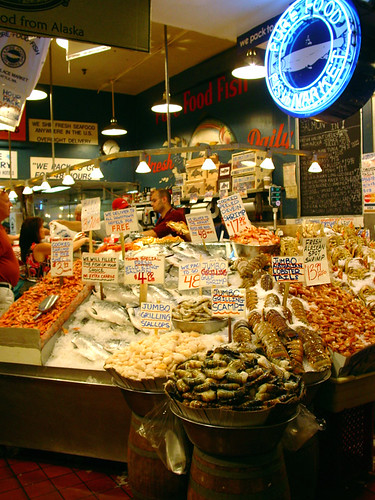
Cheap, Healthy, Environmentally Friendly Seafood Recipes

Posted on 07:21 by Unknown
First, there was Cheap Healthy Beef. Then came Cheap Healthy Pork. Now, just in time for the holidays, it’s …

CHEAP, HEALTHY, ENVIRONMENTALLY FRIENDLY SEAFOOD!

(Tell your friends and neighbors!)

My goal with this post was to find nutritional, relatively inexpensive types of fish, crustaceans, and mollusks (henceforth referred to as “fish” or “seafood”), and comp a giant list of recipes to go with them.

Unlike the Beef and Pork posts, I also took environmental concerns into consideration, as overfishing and damages to oceanic habitats have driven innumerable underwater species to the brink of extinction. And that’s never good.

I began the process with a wide sample group (all seafood, everywhere), and started eliminating based on the environment factor. For reference, I consulted the Blue Ocean Institute’s Online Guide to Ocean Friendly Seafood and the Monterey Bay Aquarium’s Seafood Watch Program. These two organizations bestow sustainability ratings of green (best), yellow (good), or red (bad) on all types of fish. Seafood that scored two greens (one from each site) or one green and one yellow were passed through. I rejected all other seafood. This narrowed the field down LOTS, to about 25 potential finalists.

Next, I researched nutritional value, which - hooray! In recommended portions (3 or 4 ounces), almost ALL environmentally friendly seafood is high in protein and low in fat and calories. The exceptions (with more than 50% of calories from fat) were Atlantic Mackerel, King Salmon, and Sablefish (a.k.a. Black Cod), which were dropped from consideration.

With about two dozen types of seafood still in the running, it came down to price, which was highly subjective due to seasonality, region, and good ol’ inflation. I ultimately gauged estimates based on online grocers and fisheries, the National Oceanic and Atmospheric Administration’s price reports, general availability, and my own observations. This knocked out about half the remaining list, as stuff like American Lobster and Pole-and-Troll Caught Tuna were too costly for the average bear. In the end, I was left with 12 tried-and-true fish finalists.

So, here they are: ONE DOZEN comparatively cheap, healthy, environmentally friendly types of seafood in all their glorious glory! And recipes, too! Happy eating!

Alaskan Pollock (a.k.a. imitation crab, surimi, or walleye pollock)
Bush Garden: California Roll (use low-fat mayo)
Cooking Light: Veggie-Surimi Sushi
DLife: Crab Casserole with Eggs

Atlantic Herring (a.k.a sardines or kippers)
AllRecipes: Pasta de Sardine
D-Life: Carb Free -Fish Cholent (Stew)
D-Life: Sardines with Roasted Tomatoes on Focaccia
Eating Well: Spring Salad with Tarragon Vinaigrette
Mario Batali: Bruschetta with Fresh Monterey Sardines

Bay Scallops
Cooking Light: Creamed Scallops, Corn, and Tomatoes
Cooking Light: Corn and Scallop Chowder
D-Life: Mexican Ceviche
Juan Carlos-Cruz: Mango Ceviche
Ming Tsai: Bay Scallop Ceviche
River Café: Taylor Bay Scallop Ceviche (go without the sea beans)
Sara Moulton: Ginger Scallops with Stir-Fried Broccoli Rabe

Catfish (U.S. farmed)
AllRecipes: Carrie’s Catfish LaRue
AllRecipes: Oven Fried Catfish
Cooking Light: Catfish Po'boy with Hoisin-Peanut Sauce
Cooking Light: Buffalo-Style Catfish Strips with Ranch Dressing
Cooking Light: Catfish with Dill Sauce
Cooking Light: Crisp-Crusted Catfish
Cooking Light: Corn-Fish Chowder
Epicurious/Bon Appetit: Catfish Tacos with Tomato and Avocado Salsa
D-Life: Baked Catfish
D-Life: Baked Catfish Parmesan
D-Life: Blackened Catfish
D-Life: Cajun Catfish
D-Life: Catfish Cakes
D-Life: Cornmeal Crusted Catfish
D-Life: Honey Mustard Catfish
D-Life: Oven Fried Catfish
D-Life: Pan-“Fried” Catfish with Southwest Tartar Sauce
Eating Well: Catfish Amandine
Mama Dip’s: Catfish Gumbo
Mike Nichols: Blackened Catfish
Sara Moulton: Southern Cornmeal-Crusted Catfish

Clams (farmed – Littlenecks, Steamers, Cockles)
AllRecipes: Scott Ure’s Clams and Garlic
AllRecipes: Clams Italiano
Cooking Light: Fettuccine with Clams and Tomato Sauce
Cooking Light: Clam Sauce
D-Life: Clam and Spinach Linguine
Eating Well: Clams Casino
Ellie Krieger: Rhode Island Style Clam Chowder

Longfin and shortfin squid
AllRecipes: Grammy’s Calamari Salad
AllRecipes: Calamari in Red Wine and Tomato Sauce
Alton Brown: Seaside Squid Salad
Cooking Light: Grilled Squid with Lemon Caper Sauce
D-Life: Seared Squid with Citrus Mango Salad
D-Life: Southwest Calamari Salad

Mussels (farmed)
AllRecipes: Patti’s Mussels a la Mariniere
AllRecipes: Mussels Marinara di Amore
Cooking Light: Mussels in Tomato-Wine Broth
Cooking Light: Mussels Marinara
Cooking Light: Mussels Steamed in White Wine
Cooking Light: Cider-Braised Mussels with Bacon
Cooking Light: Steamed Mussels in Garlic and Shallots
Cooking Light: Steamed Mussels with Lemon, Onion, and Wine (Mijillones al Limón)
D-Life: Mussels and Tomatoes in Wine Sauce
D-Life: Mussels Steamed in Seasoned Broth
D-Life: Mussels with Shallot/Wine Sauce
D-Life: Steamed Mussels in Coconut Milk
Eating Well: Mussels with Saffron and Leeks
Eating Well: Spanish Tapas-Inspired Mussels

Pacific Cod
Eating Well: Baked Cod Casserole
Real Simple: Roasted Pacific Cod with Olives and Lemon

Shrimp (pink or salad shrimp OR U.S. farmed brown, pink, or white shrimp)
(Note: If you peel and de-vein shrimp yourself, you can save money.)
AllRecipes: Marinated Grilled Shrimp (5-star rating from 426 reviewers)
AllRecipes: Spicy Grilled Shrimp
AllRecipes: Sesame Shrimp Stir-fryAllRecipes: Caribbean Holiday Shrimp
AllRecipes: Thai Spiced Barbecue Shrimp
AllRecipes: Tequila Shrimp
Cooking Light: Too many to list. They’re all here.
D-Life: Apricot-Glazed Shrimp Kabobs
D-Life: Broiled Marinated Shrimp
D-Life: Classic Shrimp Stir-fry
D-Life: Curry Shrimp
D-Life: Italian Shrimp (Barbecued Shrimp)
D-Life: Macaroni and Shrimp Salad
D-Life: Scampi Italian Style
D-Life: Shrimp and Spinach Skillet Surprise
D-Life: Shrimp Etoufee
D-Life: Shrimp Fajitas
D-Life: Shrimp Fettuccine
D-Life: Shrimp Topped with Tomatoes and Feta
D-Life: Spicy Shrimp Packets
D-Life: Stir-fry Shrimp Lasagna
D-Life: Sweet and Sour Shrimp
D-Life: Thai Shrimp Over Rice
Ellie Krieger: Caesar Salad with Grilled Shrimp
Ellie Krieger: Linguine with Shrimp
Ellie Krieger: Shrimp Salad with Cucumber and Mint
Epicurious/Bon Appetit: Shrimp Gazpacho
Epicurious: Shrimp in EscabecEpicurious: Penne with Spinach, Shrimp, Tomatoes and Basil
Epicurious: Shrimp in Garlic Sauce
Epicurious: Spicy Shrimp and Vegetable Stir-Fry
Real Simple: Shrimp with Arugula and Couscous
Real Simple: Shrimp with Tomato-Horseradish Salsa
Real Simple: Gingery Shrimp and Couscous
Real Simple: Jalapeno Shrimp
Real Simple: Marinated Shrimp with Mediterranean Salad
Real Simple: Moroccan Shrimp
Real Simple: Southwestern Shrimp Soup
Real Simple: Shrimp à la Grecque

Rainbow Trout (farmed)
AllRecipes: Rainbow Trout with Yogurt Sauce (use low-fat yogurt)
Bobby Flay: Rainbow Trout Roasted on a Cedar Plank
Cooking Light: Mushroom and Bacon Stuffed Trout
Cooking Light: Trout with Sour Cream-Cucumber Sauce
D-Life: Baked Whole Rainbow Trout in Ginger Sauce
D-Life: Herb-Baked Trout
D-Life: Stuffed Trout
D-Life: Trout with Sour Cream Cucumber Sauce
Eating Well: Grilled Whole Trout with Lemon-Tarragon Bean Salad

Tilapia (U.S. Farmed)
AllRecipes: Broiled Tilapia Parmesan (5-star recipe from 2,459 reviewers)
AllRecipes: Lemon Garlic Tilapia
AllRecipes: Easy Baked Tilapia
AllRecipes: Easy Tilapia with Wine and Tomatoes
AllRecipes: Simple Rancy Breaded Fish Fillets
AllRecipes: Fiery Fish Tacos with Crunchy Corn Salsa
Cooking Light: Sautéed Tilapia with Lemon-Peppercorn Pan Sauce Dressing
D-Life: Breaded Tilapia
D-Life: Grilled Tilapia With Zesty Mustard Sauce
D-Life: Lemon and Parsley Fish Fillets with Potatoes
D-Life: Tilapia with Cilantro Butter
D-Life: Tilapia with Fresh Herbs and Lime
D-Life: Tilapia with Olives and Tomatoes
D-Life: Tilapia With Roasted Red Bell Peppers and Olives
Eating Well: Chili-Rubbed Tilapia with Asparagus & Lemon
Eating Well: Tilapia Corn Chowder
Ellie Krieger: Fish Tacos with Chipotle Cream
Robin Miller: Moroccan-Style Tilapia with Cumin, Mango and Cilantro

White Sea Bass (aka Weakfish or Croaker) OR Hybrid Striped Bass (farmed)
Cooking Light: Broiled Sea Bass with Pineapple-Chili-Basil Glaze
Cooking Light: Sea Bass and Braised Leeks with Mustard Sauce
Cooking Light: Sea Bass and Confetti Vegetables with Lemon-Butter Sauce
Eating Well: Ginger-Steamed Fish with Troy's Hana-Style Sauce
Ellie Krieger: Fish with Tomatoes, Olives and Capers
Epicurious/SELF: Steamed Sea Bass with Ginger and Shiitakes
Kathleen Daelemans: Pan-fried White Fish
Mayo Clinic: Broiled White Sea Bass
Mayo Clinic: White Sea Bass with Dill Relish

Note #1: There are more light healthy recipes at the Mayo Clinic. Unfortunately, there’s no reviewing mechanism, or I would have posted them here.

Note #2: I would love to recommend more expensive, environmentally cool seafood, but can’t justify spending $4 on a 7.75oz can of tuna for this particular blog. However, if money is no object, please save a fish and consider purchasing these items.

Note #3: Pregnant women should not eat raw fish, and everyone should be aware of mercury warnings, which go hand in hand with quite a lot of seafood. Check back with the Monterey Bay Aquarium for info.

Note #4: Canned tuna companies have improved their regulations immensely, and landed a yellow rating on both sites, which isn’t terrible. However, tuna is still VERY heavily fished and the catching methods endanger other ocean life. Purchase in moderation.

(Photos courtesy of Flickr.com)
Read More
Posted in Buying Food, Cooking, Frugality, Health, Mains, Meat and Fish | No comments

Wednesday, 10 October 2007

11 Things Dwight K. Schrute Taught Me About Food and Frugality

Posted on 07:18 by Unknown
Hardworking. Alpha Male. Jackhammer.

As a renowned beet farmer, volunteer Sheriff’s Deputy, and Assistant to the Regional Manager at the Dunder-Mifflin Paper Company Scranton branch, Dwight K. Schrute embodies all these enviable qualities, and then some. (He’s also merciless and insatiable.) Yet, the bear-bating, martial arts-trained Schrute makes cultural contributions that go far beyond his multiple jobs.

Of course, I refer to his insights.

Our lives can only benefit from Schrute's somewhat obtuse, yet priceless aphorisms. Especially the ones about food. And cooking. And saving money.

So read on, dear … uh, readers. Learn from our fair farmer, and one day you, too, may join the DWIGHT ARMY OF CHAMPIONS.

DWIGHT SAYS: “Michael always says ‘K-I-S-S. Keep it simple, stupid.’ Great advice. Hurts my feelings every time.”
DWIGHT MEANS: Fresh, simple ingredients are the best way to a cheap, healthy meal.
In other words, eat food. Not too much. Mostly plants. Fruits, vegetables, whole grains, legumes, dabs of dairy, healthy fats and lean meats are the building blocks of delicious dinners and happy digestive systems. In the long run, they cost less and taste better than pre-packaged stuff, too.

DWIGHT SAYS: “My grandfather left me a 60-acre working beet farm. I run it with my cousin Mose. We sell beets to the local stores and restaurants. It’s a nice little farm ... sometimes teenagers use it for sex.”
DWIGHT MEANS: Buy local.
Not only does it support neighborhood farmers (who need security to keep randy kids away), but food that’s shipped from nearby tastes better, is better for you, and is easier on the environment. See here for more.

DWIGHT SAYS: "First rule in roadside beet sales, put the most attractive beets on top. The ones that make you pull the car over and go, 'Wow, I need this beet right now.' Those are the money beets."
DWIGHT MEANS: Knowing how food is marketed is vital to saving cash.
There’s a reason grocery stores put expensive, good-looking food at eye level. It’s the same mentality behind placing pricey victuals in gigantic, showy displays. When you go food shopping, don’t forget to look at the top and bottom shelves - beyond what’s immediately apparent. You’ll spend less. (Also: Stick to the perimeter of supermarkets, shop from the circular, only use coupons for stuff you’d buy anyway, keep a price book, etc.)

DWIGHT SAYS: “Studies show that more information is passed through watercooler gossip than through official memos, which puts me at a disadvantage because I bring my own water to work.”
DWIGHT MEANS: Bottled water is a big, wet gyp.
Packing a thermos from home, using the cooler at the office, or simply gathering H2O from the tap can conserve up to $600 per year, depending on how often you buy bottled. (See here, here, and here for more.)

DWIGHT SAYS: “Yes, I have decided to shun Andy Bernard for the next three years, which I'm looking forward to. It's an Amish technique; it's like slapping someone with silence. I was shunned from the age of 4 until my 6th birthday, for not saving the excess oil from a can of tuna.”
DWIGHT MEANS: Save leftovers, or suffer the terrible consequences.
Whether it’s excess mashed potatoes or those last two slices of pizza, try to pack your extras away. It’ll keep your portion size down, make a delicious office meal the next day, and put your lunch money back where it belongs – in your pocket.

DWIGHT SAYS: "Oh you know that line on the top of the shrimp? That's feces."
DWIGHT MEANS: Don’t play around with food safety.
Yeah, I think this one's pretty self-explanatory.

DWIGHT SAYS: “In the wild, there is no health care. In the wild, health care is, ‘Ow, I hurt my leg. I can't run. A lion eats me and I'm dead.’ Well, I'm not dead. I'm the lion, you're dead.”
DWIGHT MEANS: Eating smart and modestly will save your money and your life.
Obesity contributes to heart disease, diabetes, and cancer – all difficult and expensive illnesses to treat. (See Get Rich Slowly’s The High Cost of Being Fat.) Plus, it makes it very difficult to run away from lions.

DWIGHT SAYS: “Whenever I’m about to do something, I think, ‘Would an idiot do that?’ And if they would, I do not do that thing.”
DWIGHT MEANS: Find a food anti-idol.
Imagine your most extravagant friend. You know, the high roller - the one that doesn’t think twice about his finances. For what does he dole out the most dough? If he’s anything like my big-spender buds, it’s food. Learn from his bad example and try to use good judgment when buying groceries, ordering out, or settling down for a restaurant meal.

DWIGHT SAYS: [to Toby's daughter] “Hello, tiny one. YOU ARE THE FUTURE!”
DWIGHT MEANS: Teach your children well.
When it comes to eating and budgeting, kids learn largely from the examples set by their parents. Whether it’s having dinner together or serving more vegetables, changing a bad habit or starting a few good ones will benefit them for life.

DWIGHT SAYS: “When you are ready to see the sales office, the sales office will present itself to you.”
DWIGHT MEANS: Honest change can not come until one is truly ready.
If you’re looking to cut costs or make a switch to simpler foods, you must first commit yourself to the idea, and then be ready to follow through on the behaviors. Think of it like smoking: every single person on Earth can warn you to stop, but until you want to, there’s no chance.

DWIGHT SAYS: “I do not fear the unknown. I will meet my new challenges head-on, and I will succeed, and I will laugh in the faces of those who doubt me.”
DWIGHT MEANS: You don’t know unless you try.
So you’d like to make more money, cook more wholesome meals, lose a few pounds. What’s stopping you? Don’t let the fear of failure keep you from reaching your dreams - gastronomic, economic, and otherwise.

(Catch more of Dwight on The Office every Thursday on NBC.)
Read More
Posted in Cooking, Frugality, Health | No comments

Wednesday, 3 October 2007

Cheap Healthy Pork: Recipes, Methodology, and Tips

Posted on 07:33 by Unknown
A few weeks back, I posted Cheap Healthy Beef, a treatise on the affordability and nutrition of certain cuts of cow. Originally, it was supposed to be a stand-alone essay, with no sequels, follow-ups, or ensuing chapters. As it turns out though, Americans really like meat (duh), and that single entry scored more CHG hits than any other post so far. (Thanks, Google Analytics!)

Thusly, please give a warm welcome to Cheap Healthy Pork, the second episode of what is now an ongoing meat-centric series (chicken, fish, and uh … other meats to come). Like the beef post, my intent with pork (a.k.a. the Bestower of Chops, Endower of Ribs, and Giver of Bacon) is to find economical, body-friendly cuts that can easily be turned into flavorful, nutritious dishes.

Last time I tried this, the process took roughly four billion years, so this time I skipped to the chase: the six government-approved lean cuts of pork (less than 10 g fat, 4.5 g saturated fat, 95 mg cholesterol per 3 oz serving) are:

  • Pork Tenderloin
  • Pork Boneless Top Loin Chop
  • Pork Top Loin Roast (boneless)
  • Pork Center Loin Chop
  • Pork Center Rib Chop
  • Pork Sirloin Roasts (bone-in)

Since Extra-lean Ham (5% fat) and Canadian-style Bacon were also mentioned in numerous articles as being particularly tasty and trim, they’ll be included as well. Strips, cubes, etc. can come from any part of the pig, which is why they’re not featured.

As for price, I found lean pork wasn’t exorbitant, at least compared to beef. The chops and roasts are downright bargains, hovering around $2/lb, while Pork Tenderloin and Canadian Bacon can be bought on sale or in bulk for $3/lb. What’s more, since the recommended swine intake is about three or four ounces per serving (even less for Canadian Bacon), a little bit stretches a long way.

Finally came the quality research. Here, I again learned from my adventures with cattle: no matter how tough, fatty, or irascible, just about any piece of pork can be manipulated via heat or flavoring to create a mouth-watering dish. Essentially, though some may prefer a pork center cut loin chop over a sirloin roast, either can be finagled into a glorious meal.

So, without further ado, here are 47 gajillion recipes for the eight healthiest, most moderately-priced pieces of pork out there. Please note, when searching, I paid close attention to cost and health factors (chop thickness, calories, fat, etc.), but didn’t actually taste test any of the recipes. Cut me some slack, man.

Pork Tenderloin (aka Pork Tender, Pork Filet)
All Recipes: Portuguese Pork with Red Peppers
All Recipes: Teriyaki Pork Tenderloin
All Recipes: Rosemary Roasted Pork Tenderloin
All Recipes: Wine and Dijon Marinated Pork Loin
All Recipes: Pork Tenderloin with Creamy Herb Sauce
All Recipes: Chipotle Crusted Pork Tenderloin
All Recipes: Pork Tenderloin alla Napoli
All Recipes: Kalamata Pork Tenderloin with Rosemary
Cooking Light: Pork Tenderloin with Dijon Cranberry Sauce
Cooking Light: Pork Tenderloin with Guava Bourbon Sauce
Cooking Light: Pork Tenderloin with Olive-Mustard Tapenade
Cooking Light: Pork Tenderloin with Rosemary and Thyme
Cooking Light: Pork Tenderloin with Shallot-Cider Sauce
Cooking Light: Pork Tenderloin with Spicy Guava Glaze
Cooking Light: Apple Cider-Glazed Pork Tenderloin (MAN this looks good.)
Cooking Light: Fennel-Crusted Pork Tenderloin
Cooking Light: Gorgonzola Topped Pork Tenderloin
Cooking Light: Fruited Pork Tenderloin
Cooking Light: Grilled Pork Tenderloin Sandwiches
Cooking Light: Grilled Pork Tenderloin with Apple-Ginger Sauce
DLife: Apricot-Mustard Grilled Pork Tenderloin
DLife: BBQ Pork Kebabs
DLife: BBQ Pork Tenders
DLife: Chinese Pork Vermicelli
DLife: Garlic Pork with Tarragon Dip
DLife: Grilled Pork Tenderloin Oriental
DLife: Italian Pork, Squash, and Tomatoes
DLife: Jamaican Pork and Mango Stir-Fry
DLife: Pork and Green Beans
DLife: Pork Tenderloin Diane with Wild Rice
Eating Well: Pork, White Bean and Kale Soup
Eating Well: Mustard-Maple Pork Tenderloin
Eating Well: Grilled Pork Tenderloin with Mustard, Rosemary & Apple Marinade
Eating Well: Roasted Pork Tenderloin with Cherry & Tomato Chutney
Eating Well: Chipotle-Marinated Pork Tenderloin
Eating Well: Spice-Rubbed Pork Tenderloin
Eating Well: Pork Tenderloin with Roasted Plums & Rosemary
Eating Well: Apple-&-Fennel Roasted Pork Tenderloin
Ellie Krieger: Pork Tenderloin with Seasoned Rub
Ellie Krieger: Teriyaki Pork Tenderloin
Ellie Krieger: Pork Au Poivre
Ellie Krieger: Pork Medallions with Cherry Sauce
Epicurious: Roast Pork Tenderloin with Apples and Cider Sauce
Epicurious: Grilled Pork Kebabs with Ginger Molasses Barbecue Sauce
Epicurious: Asian-Style Pork Stir-Fry
Kathleen Daelemans: Seared Pork Tenderloin with Fry Pan Quick Fruit Chutney
Pork Council: Asian Grilled Pork Tenderloin with Pineapple
Southern Living: Barbecued Pork Tenderloin
Southern Living: Caribbean Pork Kabobs
Sunset: Chipotle and Maple-glazed Pork Tenderloin

Pork Top Loin Chops (aka Center Cut Loin Pork Chop, Pork Strip Chop, Double-Cut Chops)
Big Oven: Easy Summer Pork Stir Fry
Cooks.com: Orange-Spiced Pork Chops
Cooks.com: Creole-Style Pork Chops
CD Kitchen: America's Favorite Pork Chops Recipe
Cinnamon Hearts: Jamaican Pork Chops with Melon Salsa
Culinary.net: Ginger Pork and Stuffing Skillet (scroll down)
Howstuffworks.com: Cuban Garlic & Lime Pork Chops
Kalyn’s Kitchen: Cuban Pork Chops Mojo
Napoleon Grills: Teriyaki Pork Salad
Pork Council: Thai Lettuce Wraps with Satay Pork Strips
QuickEats Plus.com: Pork Chops Dijon (scroll down)

Pork Top Loin Roast (Boneless) (aka Double Pork Loin Roast)
AOL: Honey-Glazed Pork Loin with Chunky Applesauce
Big Oven: Rubbed and Grilled Pork Loin
Big Oven: Marinated Pork Loin Recipe
Big Oven: Mexican Roast Loin of Pork (try with fat-free sour cream)
CD Kitchen: Jurassic Pork
Cooking Light Community: Cranberry Pork Roast
Culinary.net: Pork and Pepper Fajitas (scroll down - use low-fat cheese)
DLife: Chile-Glazed Pork Loin
DLife: Italian Pork Roast (non-diabetics use fat-free dressing)
Food Network: Roast Pork
Food Network: Roasted Garlic and Chile-Crusted Pork Loin
Hormel: Stuffed Pork Loin
Meals Matter: Mojo Pork Roast
My Recipe Source: Roast Pork Loin with Sagey Onions
Pork Council: Moroccan Pork
Pork Council: Cranberry-Onion Pork Roast
Seasoned Skewers: Seasoned Roasted Pork Loin with Pears & Onions
That’s My Home: Pork Roast with Plum Glaze

Pork Center Loin Chops (aka Loin End Chop, Loin Chop, Pork Loin Chop, Loin Pork Chop)
3FatChicks: Marinated Pork Chops for the Grill (scroll down)
3FatChicks: Pork Fajita Pita (scroll down)
Ah Yeah Unlimited: Berry Peachy Pork Chops
About.com: Paige’s Perfect Pork Chops
Astray: Apple Glazed Pork Chops II
CD Kitchen: Mustard Bourbon Chops
Eating Well: Pork Chops with Apricot-Tomato Chutney
Eating Well: Raspberry-Glazed Pork Chops with Pickled Onions
Eating Well: Teriyaki Pork Chops with Blueberry-Ginger Relish
Epicurious: Italian Baked Pork Chops
Pork Council: Pan-Seared Chops with Pear and Soy-Ginger Glaze
Pork Council: Braised Pork Chops with Orange-Mustard Sauce
Publix: Pecan Apricot Pork ChopsRachael Ray: Pork Chops with Sweet and Hot Peppers
Rachael Ray: Maple Mustard Barbecued Pork Chops
Secrets of Good Low-Carb Living: Peppercorn Pork Chops
Southern Living Community: Crock Pot Chops (scroll down)

Pork Center Rib Chop (Rib Chop)
BBQ Recipe Secrets: Simple Grilled Pork Chops
Chicago Meat Authority: Sweet and Spicy Pork Rib Chop
Cooking Live: Sauteed Boneless Pork Chops
Cooks Recipes: Mike Ditka’s Official Tailgater’s Pork Chops
DLife: Caribbean Barbecued Pork Chops
DLife: Margarita Pork Chops
Eating Well: Oven Barbecued Pork Chops
Fine Cooking: Grilled Pork Rib Chops with Fresh Herb Rub
Food and Wine: Grilled Pork Chops with Anchovies and Swiss Chard
GO San Angelo: Barbecue Skillet Pork Chops
iChef: Pan Roasted Pork Chops
Recipe Zaar: Peach-Glazed Grilled Pork Chops
Sarah Moulton: Grilled Teriyaki Pork Chops with Pineapple Mango Relish
Sarah Moulton: Pork Chops with Mustard Crumbs
Slow Cooker Recipes: Crock Pot Rio Grande Pork Chops
Wine Experience: Glazed Pork Chops

Pork Sirloin Roast (Bone-In) (aka Hipbone Roast, Loin End Roast, Sirloin End Roast, Pork Loin End Roast, Loin Pork Roast)
Big Daddy’s: Garlic and Herb Pork Roast
Canary Girl: Canary Island Style Pork Roast (Pata de Cerdo)
Cooks Recipes: Apple Glazed Pork Roast with Sauerkraut
DLife: Slow Cooker Pork Wraps with Broccoli
FoodReference.com: Orange Herbed Pork Roast
Kitchenaid: Pork Sirloin Roast with Brown Onion Gravy (PDF pg 32)
Pork Council: Grilled Indian Pork Kabobs with Sweet Onions and Red Bell Peppers
Reynolds: Oven Bag Pork Sirloin Roast

Canadian Bacon (aka Canadian-style Bacon)
All Recipes: Canadian Bacon with Apples
All Recipes: Green Bean and Canadian Bacon Casserole
All Recipes: Orange-Glazed Canadian Bacon
Cooking Light: Caramelized Onion and Canadian Bacon Strata
Cooking Light: English Muffin Strata with Ham and Cheese
Cooking Light: Split Pea Soup
DLife: Spoon Bread with Canadian Bacon
Eating Well: Asparagus & Canadian Bacon Omelet
Ellie Krieger: Short-cut Collard Greens
Kathleen Daelemans: Mock Muffin
Meals for You: Blackberry Salad with Canadian Bacon
Pork Council: Bacon-Stuffed Shell Salad
Recipe Zaar: Canadian Bacon Split Pea & Lentil Soup (Crock Pot)
Recipe Zaar: Canadian Bacon Potato Soup
Spark Recipes: HealthierLynn's Potato & Canadian Bacon Chowder

Extra-lean Boneless Ham
Calorie Count: Italian Ham Roll-up
CD Kitchen: Angel Hair with Ham and Baby Peas Recipe
Channel3000: Donna's Barley, Black Bean And Ham Salad
Channel3000: Donna's Ham with Maple Syrup, Pineapple Ginger Sauce
Cooking Light: Double Corn and Ham Casserole
Cooking Light: Gratin of Leeks and Ham
Cooking Light: Overnight Artichoke-and-Ham Strata
DLife: Potatoes and Ham
Hormel: Hawaiian Ham Skillet Dinner
Mayo Clinic: Ham, Asparagus, and Pineapple Crepes
Meals Matter: Ham and Potatoes Au Gratin
Recipe Link: Smoky Ham and Navy Bean Stew (Crock Pot)
South Dakota DOH: Fruity Ham Slices

Aaaaaaand, that just about does it. For further research, please check out the following:
Pork and Health: health factors
Hormel: cooking tips, shopping guides, cut information
The Other White Meat: safety and handling, porktionary, history, and lore


`

Read More
Posted in Buying Food, Cooking, Frugality, Health, Mains, Meat and Fish | No comments
Older Posts Home
Subscribe to: Posts (Atom)

Popular Posts

  • Michael Pollan Earth Day Special
    Hey everybody, I didn't add "Why Bother" by Michael Pollan to this morning's links, but please read if you get the chance...
  • RECIPE INDEX
    * denotes a vegetarian recipe ** denotes a vegan/vegetarian recipe BREAKFAST Apple Cinnamon Breakfast Strata * Apple Sausage Breakfast Patti...
  • ARTICLE INDEX
    RECIPE COMPILATIONS 1 Chicken, 17 Healthy Meals, $26 Bucks, No Mayo 20 Cheap, Healthy Dishes Made From 10 Pantry Staples 38 Cheap, Healthy R...
  • Tuesday Megalinks: The Ides of April Edition
    Chocolate & Zucchini: On Greens, and How to Keep Them Fresh One genius’ strategy for preserving leafy thingies. Hint: paper towels are i...
  • The Boyfriend, Miso Soup, and Giving Thanks
    Instead of listing 5,000 different recipes for cranberry sauce or waxing poetic about perfectly seasoned stuffing (I’ll leave that to the ex...
  • Respect for the Old School: Betty Crocker’s Angel Food Cake
    We’ve been talking a lot about cookbooks around here the last week. On my end, it’s been super fun and educational, but it’s also made me ve...
  • Cheap, Healthy Salad Dressing: 102 Light Recipes
    Ah, Spring - the birds are singing, the trees are budding, the construction next door has resumed, the writers’ strike is over, and last but...
  • Comments of the Week
    This week: stellar suggestions for maximizing kitchen equipment, a few great ideas for healthier mac and cheese, and the start of the Great ...
  • Tuesday Megalinks
    Folks, I don’t know if you knew this, but it’s not only National Jelly Bean Day and National Karaoke Week, but also National Welding Month. ...
  • CHG Favorites of the Week
    Hey everbody! I learned how to embed videos! Well, actually reader Hops taught me because I'm 30 and don't understand this newfangl...

Categories

  • 15 Minutes or Less
  • About Cheap Healthy Good
  • Breads
  • Breakfast
  • Buying Food
  • Chili
  • Cooking
  • Desserts and Snacks
  • Dining Out
  • Dips and Sauces
  • Do-Gooding
  • Drinks
  • Eggs
  • Frugality
  • Health
  • Links
  • Mains
  • Meat and Fish
  • Organization
  • Pasta
  • Reader Comments
  • Sides
  • Soups and Stocks
  • Vegan
  • Vegetarian

Blog Archive

  • ▼  2008 (89)
    • ▼  April (20)
      • Michael Pollan Earth Day Special
      • Tuesday Megalinks
      • Popovers and Out
      • Comments of the Week
      • Low-Fat Broccoli Cheddar Soup: Of Cheese and Rock
      • CHG Favorites of the Week
      • Cheap, Healthy Salad Dressing: 102 Light Recipes
      • Tuesday Megalinks: The Ides of April Edition
      • Mission: Light Macaroni and Cheese
      • Comments of the Week
      • Cheesy Eggplant Bake: The Power OF WORDS
      • CHG Favorites of the Week
      • The Hour: How 60 Minutes a Week Can Save Hundreds ...
      • Tuesday Megalinks: The Jayhawks Edition
      • Light Fresh Tomato Lasagna: We’ve Got the Means to...
      • Comments of the Week
      • Chicken with Shallot-Apricot Sauce: Sweet Victory
      • CHG Favorites of the Week
      • Healthy Takeout on a Budget
      • Wednesday Note
    • ►  March (26)
    • ►  February (21)
    • ►  January (22)
  • ►  2007 (123)
    • ►  December (19)
    • ►  November (21)
    • ►  October (22)
    • ►  September (20)
    • ►  August (21)
    • ►  July (19)
    • ►  June (1)
  • ►  2005 (1)
    • ►  February (1)
  • ►  2004 (1)
    • ►  February (1)
Powered by Blogger.

About Me

Unknown
View my complete profile