Bar Deals

  • Subscribe to our RSS feed.
  • Twitter
  • StumbleUpon
  • Reddit
  • Facebook
  • Digg
Showing posts with label Buying Food. Show all posts

Wednesday, 9 April 2008

The Hour: How 60 Minutes a Week Can Save Hundreds of Dollars on Food

Posted on 10:03 by Unknown
Since I started reading personal finance and food blogs about a year-and-a-half ago, I’ve tried dozens of new dishes, learned an obscene amount about index funds, and discovered that no topic on Earth drives women into a commenting frenzy like overpriced bridesmaid dresses. Yet mostly, I think more than anything else, I’ve realized how to save money and eat well at the same time.

For this, I owe tons of thanks to destinations like Money Saving Mom and Like Merchant Ships, who have long advocated things like grocery lists and menu planning. This kind of stuff never occurred to me in my early ‘20s, and The Boyfriend and I are much better for it now. We eat like the dickens and haven’t had to sell any major organs to finance peanut butter purchases (lately).

Yet, as our needs are ever-changing and Brooklyn is Brooklyn, I’ve gradually created my own system. Basically, it’s a mish-mash of everything I’ve ever read online (excluding Office recaps), crammed into an hour. And it might not work for some. But for others – it’s exciting! And it could save hundreds of bucks a month! And if you’re interested in trying it, the process is spelled out below! Woof.

Ah – but before your first Hour begins, a few preliminary steps are necessary. These may seem like a pain in the tuchus now, but they’re vital, and after they’re completed, things will run much smoother.
  1. Go through your fridge, kitchen cabinets, pantry, and any other food storage areas of your humble abode. Make mental notes of the staples you own, and chuck or donate anything that A) you can’t identify, B) is in an advanced state of decay or mummification, and/or C) is old enough to be carbon dated.

  2. If you don’t already know, do a quick Google search to find out which two acceptable grocery stores are located nearest to you. Make sure they have online circulars, note which day of the week they come out, and be sure to sign up for any discount cards or rewards programs next time you’re in the store.

  3. Find some form of coupon source, whether it’s through the Sunday paper or a website (Coupons.com, Smartsource.com, etc.). Many of the online sites require the download of a special printer program, but they’re not terribly invasive.

Once you have these steps accomplished, it’s time to get rolling on your Hour. So, find a quiet spot, plug in your Macbook, jack up your iPod (to 11 of course), and start your timers.

00:00 – 00:15
SCAN THE ONLINE CIRCULARS

In general, a supermarket’s biggest sales are found in its weekly circulars. The most steeply discounted items, called “loss leaders,” usually go for well under the regular price, since they’re used to lure customers into stores. They also tend to include produce, meat, dairy, and staples, which are healthier than processed foods.

Use the first 15 minutes of The Hour to comb each of your two selected circulars, and record sale prices ONLY for items you willingly eat. Look especially for staple items, so you can stockpile. Your list can have any format, but here’s a sample of mine:

Pathmark
Beans (Goya 14 oz cans) – 2/$1
Bread (Arnolds) – 2/$4
Carrots - $0.59/lb
Cereal (Honey Nut Cheerios 17oz) – 2/$5
Chicken (boneless, skinless breast) - $1.99/lb
Flour (Gold Medal 5lb) - $1.99
Mushrooms - $1.50/lb

Food Lion
Cereal (GM 13-17oz) – 4/$6
Grapes - $0.98/lb
Oranges – 10/$2
Red Onions - $0.59/lb
Pasta (Ronzoni 16oz) – 2/$1


Of this list, you may only be in the mood for carrots, chicken, grapes, mushrooms, oranges, and pasta. However, you might also consider buying beans, flour, and cereal, as you’ll probably use them in the future, and it’s rare to see such good prices. (Incidentally, a great side effect of writing all those numbers down: you’ll have a better idea of what food CAN cost versus what it USUALLY costs.)

Oh, and no worries if you prefer to visit one supermarket per week. You’ll generally get better prices if you try two, but with gas costs being what they are …

00:16 – 00:30
CLIP AND ORGANIZE COUPONS

Lotsa bloggers consider coupons a waste of time, as their primary function is to get consumers to purchase goods they wouldn’t have otherwise. Yet, when applied carefully, coupons can be a great boon to one’s savings. The trick is to A) pair them with sales, and B) only clip ‘em for stuff you already use.

For instance, in this week’s Key Food circular, four boxes of GM-brand cereal were being sold for $6, total. I had two coupons for $1 off, meaning my final cost for the whole shebang was $4. They normally would have gone for about $16. Not too shabby, yo.

If you have the time, you might find it useful to gather coupons from the newspaper AND a few websites, of which Coupons.com is particularly good. One caveat, though – if you decide to print them off your computer, make sure your grocery store(s) accept(s) them. One of mine doesn’t. It’s a bummer. (Yeah, I’m talkin’ ta you, KEY FOOD.)

00:31 – 00:45
STEP 3: PLAN A WEEKLY MENU

Based on what’s on sale and what you already have stocked, draw up a menu strategy for the upcoming seven days. It’ll prevent you from ordering out, and give you an idea of exactly how much food you need, keeping waste to a minimum.

This week, since chicken breasts are going for $1.99/lb and mushrooms are $1.50, you might want to make Light Chicken and Mushroom Marsala one night for dinner. For breakfast another day, maybe try French Toast, since you have eggs and syrup, and loaves of bread are on sale for $2. Anything goes, and you can use All Recipes, Epicurious, or Food Network to search for recipes.

When writing it up, your menu can be as simple as this:

Monday
B: cereal & fruit
L: PB&J & granola bars
D: Chicken, rice & carrots


Or as complex as this:

Monday
B: Me (cereal, soy milk, grapes), TB (cereal, soy milk)
L: Me (leftovers, orange), TB (sandwich, grapes, popcorn)
D: TB & Me (Light Chicken and Mushroom Marsala, rice)


For more examples try here, here, or here.

00:46 – 00:60
STEP 4: CREATE A GROCERY LIST

Finally, the easy part. When you have an idea of what you have, what you need, and what you want to make, it’s time to create a grocery list. It should include the sale items, plus any other ingredients needed, but not much else. Then, go forth and start buyin'. Just remember, STICK TO THE LIST. It’ll keep you from purchasing extraneous, overpriced, last-minute items that your roommate will eat anyway.

And that’s it. Hour’s done. Admittedly, this procedure might take more than 60 minutes the first few weeks. But once you get the knack, it’ll flow like mad. And the savings will be plentiful. Personally, I save more on weekly groceries than either of us make at work in an hour, which makes the process totally worth it.

If anyone decides to try The Hour, I’d love to hear constructive criticism, but in the meantime, readers – any suggestions? Do you see anything I could add? Or anything I could take away for streamlining purposes? The comments are open!

(Photos courtesy of Flickr member toriloveskitty, jupiter images and raw story.)

Read More
Posted in Buying Food, Cooking, Frugality, Organization | No comments

Wednesday, 12 March 2008

Recession-Proofing Your Diet: Food Strategies for a New Economy

Posted on 08:30 by Unknown
If you’ve been to the supermarket in the last few months, the rising cost of food isn’t exactly an Elliot Spitzer-level surprise. Grain prices are up, dairy products have become a luxury, and meat … well, cheap beef is rarer than a J.D. Salinger sighting these days. CNN, MSNBC, and the newspapers are finally picking up on it, too, with more stories about global grocery shortages and ludicrous shipping expenses. It appears we’re headed for a recession, and it may not get better anytime soon.

Never fear, though – it’s the interweb to the rescue. Lots of wonderfully informed bloggers have been totally on the ball, including Cathy at Chief Family Officer and Blogher’s Alanna Kellogg. They’ve written stellar pieces on combating food inflation, replete with shopping strategies, cooking ideas, and inventive ideas for stretching a budget.

There’s not much more to say after those posts, but I figured I’d jump on the Food/Recession bandwagon anyway. (It’s a nice bandwagon – sage green with mammoth cupholders.) Hopefully, the following suggestions will build on what Cathy and Alanna have to say, and offer a few new strategies along with it.

Don’t panic. It’s not the end of the world. Grocery prices will rise and certain items may become nigh-unattainable, but you will still be able to eat. So will your family. And with a little planning, you might not notice much of a difference.

Stay informed. Information is power. I don’t know who said that (Sophocles? Joan Didion? Cher?), but he/she was right on. As dire as the news may seem sometimes, keeping abreast of the fiscal situation is vital to preparing for sudden changes. So gird your loins and peruse the news, scan some blogs, and watch the occasional Brian Williams broadcast. Be on special lookout for food stories. You’ll be smarter for it.

Take baby steps. Revamping your diet and budget the same day won’t work, and might put you off both forever. Lasting change comes through small actions executed consistently. so take it easy. Start small, with a few simple practices, and work your way up from there.

Set aside one hour per week to plan. During this hour, you can devise a weekly menu, find circular deals online, clip coupons, and map out your shopping trips, all of which could save hundreds of dollars a month. If you were paid $100 for 60 minutes of work, wouldn’t you do it? Would you think twice? (Lawyers and doctors, don’t answer that.) What’s more, it’s much easier to stay on a healthy track when you have a concrete shopping and meal plans. It keeps you from scrounging for last-minute eats.

Write stuff down. Keeping a budget, planning that menu, and creating a grocery list are three time-tested, mother-approved money-saving maneuvers. The last two strategies usually help with weight maintenance, as well. Turns out, there is no greater splurging/gorging deterrent than knowing exactly what you’re splurging/gorging on.

Sign up for savings and preferred customer cards. If you haven’t already done this, stop reading and run to your grocer. See, just about every major supermarket has a club program that offers special discounts to regular shoppers. You give them your name and e-mail address in exchange for a dinky little keychain doohickey that magically saves 10%, 20%, or 40% per purchase. As far as I know, there are no reported downsides, except for a very heavy keychain.

Start a price book post haste. Get Rich Slowly has the end-all-be-all post on these, but there’s more at Frugal Upstate, as well as a downloadable template at No Credit Needed. (Incidentally, if you’re in the New York City area and shop at Associated or Key Food, shoot me an e-mail. I keep somewhat anarchic pricebooks for these two stores, and can forward them to you.)

Go to Money Saving Mom immediately. I can’t possibly cover this topic any better than Crystal does on a daily basis. (Brown nosing? Yes. And how!) Essentially, she and a roving gang of coupon-clippin’ ladybloggers have figured out how to score deeply discounted personal effects and non-perishable food from CVS, Walgreens, Rite Aid, and more. We’re talking $133 worth of shampoo, diapers, and toothpaste for $9. And if that’s not enough, there are shopping strategies GALORE, from post to shining post.

When it comes to cookbooks and kitchen equipment, buy only what you absolutely need. If cooking is a hobby, it’s distressingly easy to blow a wad on adorable egg holders. Or a fourth Barefoot Contessa volume. Or a hard-anodized 10-piece pot set, because some dude on QVC said you SIMPLY MUST HAVE a sauté pan in every size. Truth is, there are precious few items anyone needs to make a decent meal, and most recipes can be found online nowadays. This Mark Bittman article has more, and these two CHG posts can help you find inexpensive equipment and cookbooks.

Clip coupons and bulk shop, but do it wisely. While both of these tactics might take big bucks off bills, they can also lull folks into buying stuff they don’t need. If you’re going to use coupons, make sure it’s for something you would purchase anyway. And if you’re loading that 128-oz. jar of capers into your elephant-sized CostCo cart, double check to see if it’s really cheaper per unit than a 4-oz. bottle. (While you’re at it, double check to see who on Earth needs eight pounds of capers.)

Cut back on booze, meat, and processed foods. “But Kris,” you might say,“they are the stuff OF LIFE.” And you’d totally be correct. Watching a ballgame without a dirty water dog and bucket-sized Bud Light … it’s unfathomable for some. (Note: me.) However, there’s something to be said for moderation. Eliminating these things from your diet entirely may be a pipe dream (or pipe nightmare), but reducing your consumption will save mad cash AND improve your health. To fill that hole in your stomach …

Eat real food. Pizza rolls, mozzarella sticks, and fries might be convenient, but produce, dairy, meat, legumes, and grain will help you live longer. AND, chosen carefully, they’ll cost less in the long run. Always remember to shop in season, from the circular, and around the perimeter of the supermarket, where they keep the whole foods.

Stock up. When frequently-used staple items like flour, beans, and canned tomatoes go on mega-sale, snatch up as much as you possibly can (provided there’s sufficient storage). Not only will they come in handy down the line, but pantry meals can be healthy, filling, and surprisingly delicious. For more information, Motherload’s Amy Clark has an ongoing series on stockpiling.

Go generic. Don't be scared. It's often just as good as the brand name.

D.I.Y. Cook more at home. Cook in bulk. Freeze things. Try gardening. Make your own mixes, dressings, sauces, and marinades. (They taste better, take zero culinary skill, and cost a fraction of the store-bought brands.) With a little time and effort, anything you see in the supermarket or at a restaurant can be accomplished in your own kitchen.

Drink water, but not the bottled kind. No one’s begrudging the occasional Dr. Pepper, but tap water is the superior choice for two reasons: it’s a billion times healthier and 100%, totally, absolutely free-er than free. Bottled water, while not a terrible choice, is a legendary rip-off, like bad chicken or accidentally downloading a Beatles cover band on iTunes.

Brown bag it. Any and every personal finance blog worth its salt has written about this subject 600 times (uh … except this one.), and for good reason. Not only does brown-bagging save me about $1300 per year, but it makes it much, MUCH (much) easier to monitor what I eat. Whether you’re into bento boxes or PB&J, it’s a sure-fire recession beater.

Think out of the box. No, DESTROY the box. Stupid box. There’s no faster way to bore yourself into a coma than gnawing on the same ol’ lettuce wrap week after week. To save money and keep from dying of ennui, leave your comfort zone as often as possible. Try new foods. Experiment with coupons. Cook differently. Host a potluck. Visit your ethnic market. Stepping outside the norm can inspire AND help you stick to the plan.

Don’t panic. Had to be said again.

If you're interested in reading further, these are solid sources:
  • Drastic Budgeting in the Kitchen at The Common Room
  • 50 Ways to Save Money on Your Grocery Bill at Thrifty Mommy
  • Supermarket Strategies at Real Simple
  • Debt Diet for Your Wallet and Your Waistline at Debt Hater
  • Hillbilly Housewife
How about y’all out there? How are you preparing for a potential economic downturn? Comments are open!

(Photos courtesy of jupiter images, Watt & Sons Supermarket, and Flickr member Ranjit.)
Read More
Posted in Buying Food, Frugality | No comments

Wednesday, 27 February 2008

Save Money on Seasonings: MYOM (Make Your Own Mix)

Posted on 08:34 by Unknown
The more I learn about saving cash on food, the madder I get with myself when I knowingly waste money. While this holds true for every aspect of grocery shopping, it’s double the fury when it comes to McCormick-style seasoning packets. Why? Well, almost any pre-packaged spice mix, rub, or powder can be made at home for a fraction of the price. Oftentimes, it’ll taste better, too.

Case in point: I’ve been running out of chili powder for almost a month now. It occurred to me several times to buy some, but always in places like the Q Train or the bathroom at Barnes and Noble. Finally, last Wednesday, I couldn’t wait any longer. My Turkey Chili with Beans needed a massive ¼ cup of the stuff. Pressed for time, I scrounged up a few dollars and hightailed it to Key Food, where naturally, they were all out. Rendered temporarily insane by sheer desperation, I bought a single packet of McCormick Original Chili Seasoning Mix.

It cost $2.39. ($2.39! Seriously! Not kidding! I just about choked.)

Slightly perturbed, I raced back home and immediately Googled homemade chili powders. Turns out, this Recipe Zaar mix could have been made under five minutes with spices I had lying around. Plus? PLUS? My calculations put it at a grand total of $0.18.

Needless to say, duh.

Yet, there was a silver lining, as a post was born. Listed below are roughly 35 recipes for 21 common seasoning mixes. Also included are five excellent Master Sites, in which you’ll discover dozens more concoctions beyond your wildest, spiciest dreams.

With the exception of Essence of Emeril and the Recipe Zaar Chili Powder, I haven’t tried any of these, so I’m referring them blindly. Also, I didn’t include any barbecue rubs. This is for two reasons:

A) There are approximately a billion available all over the web, and

B) I’m a born and bred New Yorker. I don’t wanna embarrass myself claiming to know anything about BBQ. (Bagels and pizza? Another story.)

Enjoy, and please go crazy in the comments section if you know of any other resources.

Master Sites
All Restaurant Recipes
Budget 101
Recipe Goldmine: seasoning search part 1 and part 2
Recipe Zaar: herb & spice mixes and marinades & rubs
Top Secret Recipes main page and search function

Adobo Powder
Chef Michele

Chili Powder
About.com
FatFree.com

Chinese Five Spice Powder
Chow Recipe Source

Curry Powder
Alton Brown/Food Network
Chow

Emeril’s Essence/Creole Seasoning/Bayou Blast
Emeril Lagasse/Food Network

Fajita Mix
About.com
Townie Blog

Garam Masala
All Recipes
O Chef

Herbs de Provence
The Epicentre
Recipe Land

Italian Seasoning
About.com
Cooks.com

Jamaican Jerk Seasoning
All Recipes
Astray Recipes

Lawry’s Seasoned Salt
Food Down Under
Group Recipes

Lemon Pepper
Fabulous Foods

Mrs. Dash
About.com

Mulling Spice
Mom’s Budget
Price Smart Foods

Old Bay Seasoning
Busy Cooks
Cooking Cache

Paul Prudhomme Seasoning
Astray.com (Cajun Meat)
Recipes Market (Regular Seasoning)

Paula Deen’s House Seasoning
Paula Deen / Food Network

Poultry Seasoning
All Recipes
CD Kitchen

Pumpkin Pie Spice
About.com
Post Gazette

Shake and Bake:
All Recipes
Food Network

Taco Seasoning
All Recipes
CD Kitchen

(Photos courtesy of McCormick and Flickr member GavinBell. )
Read More
Posted in Buying Food, Cooking, Frugality | No comments

Wednesday, 20 February 2008

Food, Frugality, and Fighting Brand Loyalty

Posted on 09:11 by Unknown
I have a confession. I’ve been writing CHG since last July, yet cooking healthily and staying on budget remain constant struggles. Though I’m learning, and hope you’re enjoying the journey, I’m ultimately not an expert chef, dietician, or personal finance guru.

But I am a media professional. And I know a little bit about advertising. And I know that the brass ring of every ad agency in existence is brand loyalty. And I know that brand loyalty can cost a food shopper (you, me, us, etc.) a lot of cash.

Today’s article focuses on that phenomenon. What is brand loyalty? When does it start? Why is it less than great? How can it be tamed? You might find the piece a bit drier than most CHG posts (in which case, pace yourself by periodically checking into Cute Overload), but it could also be the most important one yet.

(Did that sound good? Yeah? Okay, cool. Let’s get started.)

What it is
Simply, brand loyalty occurs when a consumer uses a product or service over and over again, because A) it works for her, B) it’s habitual, and C) she’s hesitant to spend cash on the unfamiliar. For example, when I buy orange juice, it’s Tropicana, and it has been for as long as I can remember. My mom always bought it, and from what I recall, her mom did, too. I rarely purchase other brands, because it’s been imprinted on my brain (through personal experience and tons of advertising) that they won’t taste as good as Tropicana.

When it begins
One of the most eye-opening moments of my professional career occurred about five years ago, when I had a meeting in a room just used by Nickelodeon. If you’re not familiar with Nick, it’s a television channel whose major target demographic is children between the ages of 4 and 11. One of their employees left a marketing presentation printout on the conference table. In it, kids (again, ages 4 to 11) were referred to as “consumers.” Yikes.

Like Nick, many (if not most) corporations start building consumer brand loyalty from birth. (It would begin at conception if zygotes could read.) Advertisers spend billions of dollars each year to promote directly to toddlers and school-age children through magazines, television shows, movies, clothes, billboards, music, commercials, and … well, you name it. The earlier marketing begins, the more ingrained the product is, and the longer those kids will be customers.

In fact, the National Institute of Media and Family estimates that “Children as young as age three recognize brand logos, with brand loyalty influence starting at age two.” If anyone has a little girl obsessed with Disney Princesses (as many of my mom-friends do), you know what they’re talking about.

Why it costs you more
Once you become loyal to a brand, that company counts on your repeat business throughout the course of your lifetime. As a result, prices can be jacked up because it’s assumed you’ll continue to pay a premium out of allegiance. What’s more, you’ll ignore competing items, no matter what advantages they present. Wikipedia puts it best: “For example, if Joe has brand loyalty to Company A he will purchase Company A's products even if Company B's are cheaper and/or of a higher quality.”

Think of it this way: there are three types of oatmeal on sale - Quaker, McCann’s, and Generi-oats. They contain mostly the same ingredients, and are essentially the same shape, color and consistency. Quaker goes for $3 a box. McCann’s is $2 after a coupon. Generi-oats runs a mere $1.50. Since it’s habit and your dear ol’ Dad always did it, you buy Quaker without thinking twice. You’re down at least $1.50 because of brand loyalty.

Now, multiply that $1.50 by the number of items in your shopping cart. How much does brand loyalty cost you per trip? Per month? Per year?

What does this have to do with the “Healthy” part of “Cheap, Healthy, Good”?
Well, advertisers throw a LOT of resources into marketing processed food, meaning you have a better chance at becoming brand-loyal. Those products are generally less nutritious than whole foods like meats, produce, and dairy, which aren’t pushed as hard in commercials and print ads. So, not only do brand-name processed foods cost more, they can crowd fresher, healthier foods out of your shopping cart.

How to fight it
While advertising and some brand loyalty are nearly impossible to avoid, there are steps you can take to minimize their influence:

EVERYDAY LIFE: Flip off the TV. Mute commercials. Try to minimize advertising found around the home. Don’t prioritize brand names, especially in front of kids. Promote media literacy. Stress variety and try new things.

FOOD: Buy generic. Experiment with brands besides the ones you regularly use. Shop with coupons, which offer savings on a different brand each week. Use the circular, which varies discounts throughout the year. Cook from scratch. Purchase foods found around the perimeter of the supermarket. Cut back on brand-based cookbooks.

A caveat
You know what? Though they’re nearly twice the price, I find Ghirardelli chocolate chips tastier than Nestle. Inarguably, they make my cookies better. I’ve developed a brand loyalty to them. On the same note, I’m highly hesitant to switch my contact lens solution. Other products dry out my eyes, and I have an annoying habit of walking into sharp things when I can’t see.

There’s nothing wrong with brand loyalty if a product works for you, especially if you’ve tried the alternatives. It’s when that devotion is uninformed and automatic there can be an issue.

In the end
Brand loyalty isn’t catastrophic, and it won’t ruin any lives or hopes for the future (like say, smoking or riding the M Train naked). While it can be costly, both nutritionally and wallet…ally, knowing the facts and shopping smart is a stellar way of addressing concerns. If you’re interested in learning more, check out these resources:
  • Answers.com provides a deeper explanation of brand loyalty.
  • For hardcore shopping statistics, there’s this About.com article, and more from the Grocery Manufacturers of America.
  • For lots of somewhat frightening information on kids and advertising, check out the National Institute on Media and Family’s fact sheet.
(Photos courtesy of Global Package Gallery, The Wooden Porch, and Flickr member aqualilflower.)
Read More
Posted in Buying Food, Frugality, Health | No comments

Wednesday, 6 February 2008

Grocery Shopping: What Works for Me

Posted on 09:04 by Unknown
(Thank you to everyone who voted for CHG in Culinate’s Death by Chocolate contest. If you didn’t see it early yesterday, the entry should be up now. Voting goes through the 8th. Yay!)

Recently, Kacie over at Sense to Save posted an online challenge asking bloggers to recap their grocery shopping methods. I really liked the idea, and figured it might be good for blog transparency purposes. (A.k.a. Do I walk the walk?) Also, I’m secretly hoping someone out there has a better system, and is willing to share.

So first, here’s a step-by-step breakdown of how I USED to buy food:

1) Become hungry. This part was simple. It usually involved moving, speaking, or watching an Olive Garden ad. (Curse you, unlimited breadsticks. CURSE YOU.)

2) Go to nearest bodega/supermarket/insanely expensive coffee shop. I live within a one-block radius of three delis, a supermarket, and a KFC. In the old days, I’d cruise over to any one of these and pick up whatever tickled my fancy (which was everything).

3) Buy whatever I want to eat. Price was no object.

4) Shovel food into gaping maw. Fat/calorie/preservative content was no object.

5) Lament lack of funds and ever-expanding tuchus. This part generally involved a lot of self-loathing and vows to never eat again. Needless to say, the pledges didn’t stick, and I was back at Step 1 pretty dang fast. Why, hello there, vicious, self-perpetuating circle of poor eating habits! My name is Kris.

My old method lacked forethought, concern for my health, and any discernable spending strategy. These days, it’s different. I cook. I plan meals a week in advance. I study nutrition labels like I’m being tested later. And while the following process may seem a tad time-consuming, I promise it’s not. Half of it happens in my head before pen is ever set to paper. I:

1) Take stock. What food do I need more of? What am I okay with for another month? Why the crap do I have 128 ounces of chicken breast? This step ensures I know what’s already on hand, so I don’t go buying a ninth pound of poultry.

2) Plan ahead. Which holidays are coming up? Birthdays? What foods should I be on the lookout for? If it’s close to Thanksgiving, butter, onions, or sparkling cider are good bets. For the Super Bowl, chips and beer are the order of the day. Prepping for celebrations this way has saved me a ton of dough.

3) Gauge moods. What are The Boyfriend and I craving? What have we OD’d on lately? (A.k.a. Is it possible to consume too much spaghetti?) By checking our appetites before I set out, I avoid guessing and extraneous purchases while shopping.

4) Consider the blog. What can I make for Monday and Friday? Do I have a backup in case something goes terribly, terribly wrong? (See: Teriyaki Sweet Potatoes.)

5) Make a preliminary list. Based on the previous five steps, what are the foods I absolutely have to buy, whether or not they’re on sale? Here’s a recent prelim list, from the week I made Curried Sweet Potato Stew:
  • Fruit
  • Veggies (peppers, mushrooms, etc.)
  • Snack dip
  • Tomatoes
  • Romaine
  • Carrot
  • Ginger
  • At least four sweet potatoes
  • Broth
  • Brown lentils
6) Browse online circulars. What are this week’s loss leaders? What produce has the biggest markdown? Is there EVER, EVER a deal on soy milk? (Answer: no.) Each Friday, I read three local supermarket circulars for values and adjust my list accordingly. I also …

7) Record good deals in a price book. JD at Get Rich Slowly has the definitive post on these guys. (Go! Look now! Then come back.) They’re KEY to scoring deals and keeping track of cost cycles over the course of a year.

8) Research recipes. Is pork going on mega-sale? Will broccoli never hit $0.88/lb again? If there’s a solid discount item (or items), I’ll plan a recipe around it and note whatever else I need.

9) Make a master list. Ultimately, what do I want to buy? Based on all the previous steps, I create a final shopping document complete with brand names and prices. (That’s making it way more complex than it sounds. Really, it’s a piece of notebook paper.) When I hit the aisles, I don’t deviate from my plan.

10) Eat. What will tide me over while I shop? This strategy is all over personal finance blogs, and for good reason. It keeps my impulse M&M purchases WAY, way down.

11) Grab my canvas tote. It’s pretty! And environmentally sound! (But mostly pretty.)

12) Find my keys. I lose them a lot.

13) Shop. I hoof it, so my final haul depends entirely on A) my upper body strength at the time, and B) what can be crammed into my fridge. With four people sharing it, space is at an extreme premium.

And that’s it. All told, I blow about two hours and $45 each week (including walking time) on planning and shopping for a pair of people. Compared to Crystal and Keren, it looks like amateur night at the Apollo. But it’s much better than before, and I’m still working on it. Specifically, I’m trying to better these areas:

1) Coupons. The online databases are useless for my zip code and most coupons are for convenience products, which I tend to eschew anyway. (Also, I’m lazy. Oh, so very lazy.) Nonetheless, I know they CAN be a boon, and resolve to start a collection.

2) CVS/Target/Walgreens deals. While CVS and Walgreens are pretty far away and the Brooklyn Target is legendarily insane, it’s worth braving all three for the discounts.

3) Eating less meat. The Boyfriend and I thrive on poultry. (If God’s a chicken, we’re kinda screwed.) It’s comparatively thrifty and can be cooked 14,000,000 different ways. Yet, legumes, veggies and starches are cheaper. If I can ease Chicken Provencal out of our diets, it could make a big dent in the budget.

So, all you readers out there – how do you shop? What improvements have you made in your system? What’s your best grocery tip? Our operators are waiting for your call. (Translation: comments are open.)

(Photos courtesy of Flickr members Tortuga One, and Neato Coolville)
Read More
Posted in About Cheap Healthy Good, Buying Food, Frugality | No comments

Wednesday, 23 January 2008

The Case for Frozen Food

Posted on 09:24 by Unknown
As I begin this post, I’m enjoying a highly delicious, unusually nutritious homemade mixed berry smoothie. Normally, the cost of making such a drink in mid-January is prohibitive, with fresh berries running up to a dollar per ounce. But if you order a similar smoothie at a place like Jamba Juice? At four or five bucks a pop, you may as well blow your nose on Abe Lincoln.

Enter Trader Joe’s bag o’ frozen strawberries, blackberries, and blueberries. For a mere $2.99 you, too, can procure a pound of sweet, juicy produce that tastes almost as good as the day it was wrenched from a vine. Throw in some low-fat yogurt, a little light soy milk, and a dash of honey, and *poof*. It’s manna in an glass for less than half the price of the Jamba shake.

When it comes to whole fruits and vegetables, fresh is nearly always preferable to frozen. Yet, there are circumstances in which iced goods have clear benefits. An affordable blueberry smoothie in the dead of winter is just one example.

Nutritionally speaking: frosty fare retains most of its vitamins and minerals because it’s flash-frozen soon after being picked. In some cases, frozen eats may actually be healthier than fresh, since they’re not artificially ripened, shipped long distances in precarious containers, or left laying around to wilt. More on that here.

Financially speaking: I bought a pound of mixed, chopped bell peppers for $1.29. Fresh green bells were going for $1.49/lb at Key Food, and red and yellow peppers for much more than that. Frozen produce can be a massive bargain, especially because supermarkets seem to run specials almost every week.

Culinarily speaking: home cooks get pretty tired of potatoes, apples and winter squash after a few months. A variety of iced goods counters the boredom. Yeah, the quality can waver (greatly … oh, so greatly), but y’know – the spice of life and whatnot.

Conveniently speaking: chilled fruits and veggies are on par with zippers and the invention of the wheel. Produce will last for months in a freezer and can be purchased in giant, hulking bags. Sure, there’s some thawing time, but overall, the handiness is hard to match.

Flavor … uh … ly speaking: preservatives are kept to a minimum, since the cold acts as a safeguard against the elements. What’s more, food is given a chance to ripen before it’s packaged, meaning it'll taste better than that suspicious February chile.

It’s worth noting that lots of processed frozen entrees don’t meet these criteria. For every semi-healthy Amy’s Kitchen shepherd’s pie or Lean Cuisine panini, there is a slew of artery-clogging Hot Pockets, Hungry Man Hearty Breakfasts, and TGI Friday’s mozzarella sticks. The calorie counts in these foods can reach four digits, never mind the fat and sodium levels. For the sake of convenience, it might be difficult to cut them out entirely, but don’t forget to read the nutrition labels before you buy.

Also meriting a mention is the environmental impact of mass-produced frozen foods, which is … hard to quantify. Freezing a string bean consumes a lot of energy. Keeping it cold uses even more. However, you do save precious food miles by avoiding imported off-season goods. (See? Hard to quantify.) To reduce the negative effects on the atmosphere, try to buy the majority of your produce fresh, in-season and/or organically-grown. Or? Grow and freeze your own fruits and veggies. The Earth will thank you.

That’s it for me (I have a smoothie to finish), but if you’re interested in reading more about the glory and magic of whole frozen foods, these resources will do quite nicely:
  • Good Housekeeping has a great article about choosing the best-quality and healthiest frozen food. (Including a graph! Graphs are our friends.)
  • If you absolutely have to eat a prefab frozen meal, this MSNBC piece will help you choose the right one.
  • WebMD says everything I just did, only with way more medical degrees to back it up.
  • Finally, to find out how long that cauliflower is gonna last in the icebox, check out Health Recipes.
Read More
Posted in Buying Food, Frugality, Health | No comments

Wednesday, 16 January 2008

Cheap Healthy Vacation Food Part Deux: 10 More Tips for Travel Eats on a Budget

Posted on 07:16 by Unknown
A few months ago, I wrote Cheap Healthy Vacation Food: 61 Tips for Travel Eats on a Budget, an extensive article about the 2004 Red Sox. (Kidding. The title’s pretty self-explanatory.) My recent India experience has given me a little more insight into the subject (including the wide, wonderful world of jet lag), so I thought I’d revisit the piece to add a few suggestions.

My limited range of experience might not be enough, though, so if y'all have time, I’d love a few ideas from readers. If there are enough new ones, I’ll publish them in a third article (Oo! A Threequel!) sometime in the near future. Together, we can create a vacation food guide the fine folks at Frommer's would envy.

That said, let’s get to it. Here are some more salient points for travelers who eat. (Which is all of us, no?):

1. Read at least one guidebook from cover to cover. The Lonely Planet series contains extensive text and background on local cuisine, while the DK books include pictures and terminology. Both have restaurant suggestions for all budgets and diets, and I’ve found the referrals to be pretty decent (especially Lonely Planet). Wikitravel and TripAdvisor are two other excellent sites for ideas.

2. Bring a portable guide (with pictures if possible) of foods native to your destination. This goes double if you’re visiting a country that speaks an unfamiliar language. Case in point: two years ago, I visited Barcelona with my family. I (repeatedly) ordered what I thought was pasta, and was (repeatedly, because I’m an idiot) surprised when it turned out to be something else. Knowing your cannellini from your cannelloni and your channa from your chai can save your cash and your digestive system.

3. Research health concerns before you go. Unless they’ve built up immunity like Westley did to iocane powder (Princess Bride, represent!), Westerners will become super-sick if they chug Indian water. (Hello there!) In fact, any unfamiliar cuisine or drink can mess with a visitor’s gastrointestinal tract. Before you go abroad, check up with the CDC on food and beverage restrictions. Taking some Immodium, Pepto, or an antibiotic along on the journey is good insurance, too. You’ll lay down some dough up front, but it could prevent lost vacation days or even an expensive trip to the ER. (Don't freak out, though. Most vacation destinations are just fine.)

4. Beware of tourist traps and commission scams. Tourist-oriented restaurants can charge up to three times what you’d normally pay for the same food somewhere else. Plus, in India at least, some restaurateurs give kickbacks to cabbies and drivers that bring foreigners to their eateries. Guidebooks and websites will have specific information about these, so read up.

5. Ask an expatriate. Our first day in Delhi, we ran into Ann, a French woman who moved to India in 1992. She spoke perfect English and Hindi (and French, duh), and knew India’s food customs and rituals way better than we ever could. Her suggestions were invaluable, and we ended up seeing parts of the city we wouldn’t normally have seen otherwise. The Anns of the world are faboo resources, and if you're lucky enough to stumble upon one, bask in her wisdom.

6. Know cultural mores relating to food. Are you eating with the correct hand? Should you tip an Irish bartender? Would you suggest Fuddruckers to a Hindu? These are questions world travelers must ask themselves before they hop on that plane. Being prepared culturally is just as important as being ready physically and financially. Otherwise – international incident! And no one wants to be caned.

7. Carry bottled water. Normally, I regard bottled water as a scam on par with triangle schemes and the Teapot Dome Scandal. However, it could be a good idea to carry an Evian around when you’re A) sightseeing, B) a little woozy, or C) unsure about the tap water. Hydration is important, when and wherever you are in the world.

8. Take steps to alleviate jet lag. Oh dear god, I did NOT fully comprehend the seriousness of jet lag before going away, and it kicked my butt from here to Tallahassee. The last five days are a nauseous, slap-happy blur. I’m okay now (finally), but besides exercising, taking melatonin, and adjusting my sleep schedule, I should have drank more fluids, avoided alcohol and caffeine, and maybe even considered the jet lag diet. For more information, see WebMD or the aptly titled No Jet Lag site.

9. Purchase food souvenirs from reliable sources. This tip actually comes from an anonymous reader. He/she says: “Be careful of buying spices abroad especially from markets - there is little or not regulation - and sometimes there can be nasties in them.” I’m itchy just thinking about it, so if you do shop for edibles, make sure the store is reputable and clean. Also, remember to check if the food’s even allowed back through Customs. Otherwise, this can happen.

10. Know the currency conversion rate. While this tip is relevant to all overseas expenditures, it’s especially important with food. It’s pretty easy to blow six pounds or 400 rupees on a beer, because the dough you (I) hand over is different from what you’re used to. Psychologically, it’s like Monopoly money. But when you (I) get home and discover you (I) blew $10 on a Kingfisher … oy. Keep the conversion rate written down somewhere. And when in doubt, use your cell phone calculator to compute costs.

Again, I’d love to hear more suggestions on this topic. Oh, and coincidentally, JD at Get Rich Slowly penned a nice travel guide yesterday, so don’t forget to scope that, as well.

Happy vacationing!

(Photos courtesy of Flickr member felibarrientos, cutglassdecanter, publicenergy, and Graham Spicer.)
Read More
Posted in Buying Food, Dining Out, Frugality, Health | No comments

Wednesday, 12 December 2007

Frugal Grocery Shopping for City Folk

Posted on 07:14 by Unknown
(I want to apologize up front for the New York-centrism of this post. I do hope it helps others in metro areas, though, and I would love, Love, LOVE to get comments, feedback and suggestions.)

Since 2000, I’ve lived in seven apartments in three different boroughs of New York City. The rentals have ranged from a spacious three-bedroom in a riverside high-rise to a microscopic box adjacent to a dive bar. While I’ve truly liked almost every place, each has presented some interesting obstacles for grocery shopping. Since a lot of big city apartment-dwellers have probably met with the same hurdles, I figure I’d address a few and provide alternatives.

See, we urbanites face a unique set of issues when we buy food. Space is our main problem, meaning bulk buying, gardening, and canning can be very difficult, if not impossible. Transportation is another biggie. Lots of metro citizens don’t have access to cars. Public buses and subways are wonderful, but make it difficult to carry much of anything. Lack of access to fresh food is also a concern, since the nearest farm or farmers market can be miles away. Finally, there’s good ol’ price. Depending on the city or neighborhood in which one lives, a box of cereal can be twice the cost of one two miles away. Economics are tricky like that.

Fret not, though. All isn’t lost, as city-zens have two assets that suburban peeps and rural folk generally don’t: proximity and ethnic diversity. I live within a ten-minute walk of at least three major grocery stores, so circular sales can save me a lot of dough. What’s more, dozens of bodegas, Korean groceries, and polish delis line the streets of my borough, so I’m never at a loss for variety.

With those six areas (Space, Transportation, Lack of Access to Fresh Food, Price, Proximity, Ethnic Diversity) in mind, here are a few tips to making the most of grocery shopping and storage in Gotham. (Or Seattle.) (Or San Francisco.) (Or Chicago.) (“Or Boston,” The Boyfriend says.) (“And don’t forget Philly. It’s nice there. There’s a bell.”)

SPACE

Be creative with storage. Install high shelving. Snag a kitchen cart or pot rack off Craigslist. Pack food in places it wouldn’t normally go (under the bed, in the closet, etc). Draw up a floor plan of your flat and see where storage furniture can fit best. Any out-of-the-box thinking can help you stock and keep goods at home. Apartment Therapy: The Kitchen (now just TheKitchn) has some great ideas.

Make a deal with neighbors or roommates. I confess I’ve never done this myself. (New York is kind of isolationist that way.) Yet, if you have neighbors or pals you trust, you might be able to rent or barter for a shelf or two.

Try single pot, balcony, or window gardening. Impossible, you say? Look at this lady! And this one! And this … uh, this one doesn’t mention their gender, but look at ‘em anyway! You may never have that pumpkin patch you’ve dreamed of, but a batch of fresh basil is in reach. Rachel, the Cheap Healthy Gourmet, succeeded in growing said basil, as well as dill, and mint (mint, and more mint) in her place. Another roommate coaxed 48,000 Italian peppers out of our harsh Brooklyn soil. Even if you have the blackest of thumbs, it’s worth a shot.

Sign up for a bulk warehouse, but buy only what you can carry. Certain BJ’s and CostCo deals are unbeatable, but cramming a 128-oz. jar of mustard into an already-crowded cabinet is not gonna happen in most apartments. Instead of whole-hog bulk shopping, go every month or two and bring home only what you can lift. You’ll still score the deals, you can still use public transportation, and occupied square footage will be kept to a minimum.

TRANSPORTATION

Rent a car and split the cost between friends. A three-hour rental in the middle of the day can be relatively inexpensive and very helpful to a group that’s dividing the fee. If Enterprise or Avis aren’t feasible, lots of cities have services like Zipcar nowadays. For $8.50/hr, you can have a vehicle for as long as you like.

Snag an Old Lady Cart off of Craigslist, eBay, or the local Dollar Store shelf. You may ask yourself, “Where does that highway go to?” “What the crap is she talking about?” But if you’ve ever had a grandmother … or two … that lived/lives in Queens, you know exactly what an Old Lady Cart is. It’s this thing. Is it ugly? Yes. Will it make you look 175-years-old, even if you just hit puberty? Yup. Can it carry 49 lbs. of fresh cauliflower with a bag of laundry piled on top? You betcha. If you live more than a few blocks from a supermarket or your arms tire easily, the Old Lady Cart is the perfect go-to.

Bike it. If you have a cycle, go to town. Or rather, go to a place where there are cheap groceries. You’ll get a good workout, and it’s blessedly free.

LACK OF ACCESS TO FRESH FOOD

Visit available farmers’ markets. The USDA and Local Harvest have lovely sites on which you can pinpoint the farmers’ markets closest to you. Scout a few, figure out if the expenditure’s worth it, and proceed accordingly. In the city, it’s the closest you might come to a freshly-picked ear of corn.

Make friends with a butcher, fishmonger, or produce … uh, guy. Generations of New Yorkers have scored prime cuts of meat because they have friendly relationships with Buddy the Butcher down the block. Nobody knows food like the people who catch and cut it up for you. So, make a friend! Ask him (or her) what to buy! If you find his suggestions tasty and reasonably-priced, stick with him for life. Or at least ‘til you have to move again.

Ask a waitress, maitre’d or chef. Restaurant workers know where to buy the freshest, least expensive produce, meat, fish, and extras out there. If they’re any good, they have to. Speaking up, rattling off questions, and taking notes can point you in the direction of infinite and wonderful culinary discoveries.

Check out the Food Trust’s Supermarket Campaign. The New York Times recently reported that the rumors are true – calorie for calorie, junk food costs less than healthy food. It hurts low income earners the most. Based in Pennsylvania, the Food Trust is looking to combat the issue by making fresh vegetables and fruit available to people in the inner city. If you’re in the area and need the assistance, this could be a great boon to your savings.

PRICE

Use specialty and high-end markets sparingly. In Manhattan at least, Whole Foods seems to be competing with Starbucks for the 2007 Overpriced and Omnipresent Awards. If you’re in search of a pre-marinated rack of lamb to serve your boss and his grandmother, go nuts. But if you’re shopping for a can of beans and a 30-lb bag of rice, avoid fancy grocers at all costs.

Beware faux-organic stores. The booming gentrification of Brooklyn has given birth to a new breed of market. It’s the overpriced, quasi-gourment “organic” store, where there are few vegetables and a box of butternut squash soup will run $4. Try to avoid these places if possible. They might look nice, but it’ll cost a bundle each and every time. (A single cookie for $2.50? You gotta be kidding.)

Look for drugstore deals. Though they’re not cornucopias of fresh food, CVS, Walgreens, Rite Aid and other chains are staple extravaganzas. What’s more, they have sales and offers that few people know about. Crystal at Money Saving Mom and Kacie at Sense to Save have written extensively about these bargains, so start reading.

Shop at Target or Trader Joe’s. I’ve found that both these bigger box stores often have better values than local supermarkets. Knowing what to look for is key, though. If you can (and if they’re available) spend a few minutes taking mental notes of prices and foods you like. From cereal to wine to a dozen eggs, odds are you’ll find a good deal somewhere in there.

Follow all the rules that suburban and rural people do. Start a price book. Plan your menus ahead. Make lists. Shop for loss-leaders. Don’t buy groceries when you’re hungry. Avoid impulse buys. What works for the homeschooling mom of 37 will work for the single urbanite just out of college. (Except for the breastmilk stuff. Never mind about that.)

PROXIMITY

Scope your ‘hood. Every area I’ve ever lived in has held some pleasant culinary surprises. Smaller stores may not have a website or be listed in a city guide, but a stroll around the block can reveal that spice market you’ve been secretly hoping for.

Check circulars online and compare surrounding stores. Oh, sweet Google Maps. You used to just tell me my zip code when I forgot it after the 6th move. Now you can list every supermarket (with address and phone number) within a five block radius of my humble abode. You also connect to websites, which have circulars, sales, and special discounts. Google maps, will you marry me? The Boyfriend won’t mind. He likes your layout.

Hit up a variety of vendors for sales. Inside an hour or two, I can hit up three different markets, buying loss-leader weekly groceries at each. (BAM!) I know a lot of cities aren’t as tightly-packed as New York (where I live within ten feet of 47 families of eight), but urban layouts can mean lots of choices, which in turn mean big savings. Try the just-mentioned Google Maps to plot your plan of attack or space your shopping trips out over the course of a week.

ETHNIC DIVERSITY

Go ethnic. I’ve written pretty extensively on the wonders of ethnic markets, but their prices and selection are often unbeatable.

Visit stores out of your comfort zone. Are you a tiny Ohio woman who doesn’t speak a lick of Korean? Are you a born-and-bred Detroit native who wouldn’t know Arabic if it jumped up and gave you a wedgie? Different cultures may be, uh, foreign to us, but taking a walk in a different neighborhood can familiarize you with a unique cuisine and a whole new set of people.

Take a cooking class focusing on dishes from another culture. While they might cost a bit up front, cooking classes can pay off huge in the long run. Learning to prepare foreign dishes will open up your palate, provide more shopping (and saving) opportunities, and make friends and influence people.

That’s it. Again, I’d love to hear comments and suggestions. Thanks for reading!

(Photos courtesy of Flickr.)
Read More
Posted in Buying Food, Frugality, Organization | No comments

Sunday, 9 December 2007

Fish Notes

Posted on 09:34 by Unknown
Hey Everybody - just two quick things about the Cheap, Healthy, Environmentally Friendly Seafood post from a few days ago:

1) Some wondered why salmon was left out, as wild-caught Alaskan scored two green environmental ratings, and it's generally considered pretty healthy. Sadly, it seems to cost around $10/lb, which makes it a bit pricey for this blog.

2) Meredith had a great point in the comment section: "I just wanted to emphasize how important it is to ASK where your shrimp is coming from at restaurants and stores before you purchase it. Most shrimp (especially pre-packaged/prepared frozen shrimp) is imported from extremely unsustainable, harmful tropical fishery industries. These practices destroy tropical mangrove forests, often result in the dumping of pesticides into tropical watersheds (which poison local people), produce large bycatch of sea turtles, and are so commercially competitive that armed gunman often stand guard around the shrimp farms (I know an Ecuadorian that grew up on a shrimp farm like this). So, consumers should know that it is actually fairly difficult to find US farm-raised shrimp, so they should never assume what they are buying is local. Always ASK. For more details, this article sums it up very well."

Thanks, and tune in tomorrow for a lovely entry on Lidia Bastianich's Roasted Root Vegetables.
Read More
Posted in Buying Food | No comments

Thursday, 6 December 2007

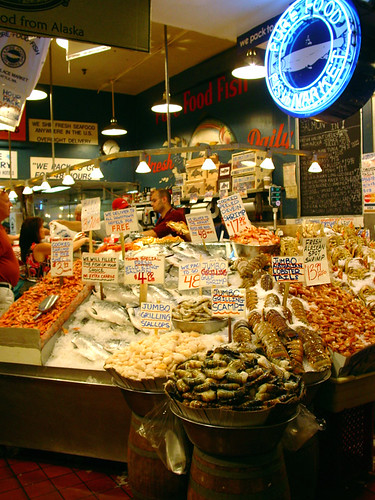
Cheap, Healthy, Environmentally Friendly Seafood Recipes

Posted on 07:21 by Unknown
First, there was Cheap Healthy Beef. Then came Cheap Healthy Pork. Now, just in time for the holidays, it’s …

CHEAP, HEALTHY, ENVIRONMENTALLY FRIENDLY SEAFOOD!

(Tell your friends and neighbors!)

My goal with this post was to find nutritional, relatively inexpensive types of fish, crustaceans, and mollusks (henceforth referred to as “fish” or “seafood”), and comp a giant list of recipes to go with them.

Unlike the Beef and Pork posts, I also took environmental concerns into consideration, as overfishing and damages to oceanic habitats have driven innumerable underwater species to the brink of extinction. And that’s never good.

I began the process with a wide sample group (all seafood, everywhere), and started eliminating based on the environment factor. For reference, I consulted the Blue Ocean Institute’s Online Guide to Ocean Friendly Seafood and the Monterey Bay Aquarium’s Seafood Watch Program. These two organizations bestow sustainability ratings of green (best), yellow (good), or red (bad) on all types of fish. Seafood that scored two greens (one from each site) or one green and one yellow were passed through. I rejected all other seafood. This narrowed the field down LOTS, to about 25 potential finalists.

Next, I researched nutritional value, which - hooray! In recommended portions (3 or 4 ounces), almost ALL environmentally friendly seafood is high in protein and low in fat and calories. The exceptions (with more than 50% of calories from fat) were Atlantic Mackerel, King Salmon, and Sablefish (a.k.a. Black Cod), which were dropped from consideration.

With about two dozen types of seafood still in the running, it came down to price, which was highly subjective due to seasonality, region, and good ol’ inflation. I ultimately gauged estimates based on online grocers and fisheries, the National Oceanic and Atmospheric Administration’s price reports, general availability, and my own observations. This knocked out about half the remaining list, as stuff like American Lobster and Pole-and-Troll Caught Tuna were too costly for the average bear. In the end, I was left with 12 tried-and-true fish finalists.

So, here they are: ONE DOZEN comparatively cheap, healthy, environmentally friendly types of seafood in all their glorious glory! And recipes, too! Happy eating!

Alaskan Pollock (a.k.a. imitation crab, surimi, or walleye pollock)
Bush Garden: California Roll (use low-fat mayo)
Cooking Light: Veggie-Surimi Sushi
DLife: Crab Casserole with Eggs

Atlantic Herring (a.k.a sardines or kippers)
AllRecipes: Pasta de Sardine
D-Life: Carb Free -Fish Cholent (Stew)
D-Life: Sardines with Roasted Tomatoes on Focaccia
Eating Well: Spring Salad with Tarragon Vinaigrette
Mario Batali: Bruschetta with Fresh Monterey Sardines

Bay Scallops
Cooking Light: Creamed Scallops, Corn, and Tomatoes
Cooking Light: Corn and Scallop Chowder
D-Life: Mexican Ceviche
Juan Carlos-Cruz: Mango Ceviche
Ming Tsai: Bay Scallop Ceviche
River Café: Taylor Bay Scallop Ceviche (go without the sea beans)
Sara Moulton: Ginger Scallops with Stir-Fried Broccoli Rabe

Catfish (U.S. farmed)
AllRecipes: Carrie’s Catfish LaRue
AllRecipes: Oven Fried Catfish
Cooking Light: Catfish Po'boy with Hoisin-Peanut Sauce
Cooking Light: Buffalo-Style Catfish Strips with Ranch Dressing
Cooking Light: Catfish with Dill Sauce
Cooking Light: Crisp-Crusted Catfish
Cooking Light: Corn-Fish Chowder
Epicurious/Bon Appetit: Catfish Tacos with Tomato and Avocado Salsa
D-Life: Baked Catfish
D-Life: Baked Catfish Parmesan
D-Life: Blackened Catfish
D-Life: Cajun Catfish
D-Life: Catfish Cakes
D-Life: Cornmeal Crusted Catfish
D-Life: Honey Mustard Catfish
D-Life: Oven Fried Catfish
D-Life: Pan-“Fried” Catfish with Southwest Tartar Sauce
Eating Well: Catfish Amandine
Mama Dip’s: Catfish Gumbo
Mike Nichols: Blackened Catfish
Sara Moulton: Southern Cornmeal-Crusted Catfish

Clams (farmed – Littlenecks, Steamers, Cockles)
AllRecipes: Scott Ure’s Clams and Garlic
AllRecipes: Clams Italiano
Cooking Light: Fettuccine with Clams and Tomato Sauce
Cooking Light: Clam Sauce
D-Life: Clam and Spinach Linguine
Eating Well: Clams Casino
Ellie Krieger: Rhode Island Style Clam Chowder

Longfin and shortfin squid
AllRecipes: Grammy’s Calamari Salad
AllRecipes: Calamari in Red Wine and Tomato Sauce
Alton Brown: Seaside Squid Salad
Cooking Light: Grilled Squid with Lemon Caper Sauce
D-Life: Seared Squid with Citrus Mango Salad
D-Life: Southwest Calamari Salad

Mussels (farmed)
AllRecipes: Patti’s Mussels a la Mariniere
AllRecipes: Mussels Marinara di Amore
Cooking Light: Mussels in Tomato-Wine Broth
Cooking Light: Mussels Marinara
Cooking Light: Mussels Steamed in White Wine
Cooking Light: Cider-Braised Mussels with Bacon
Cooking Light: Steamed Mussels in Garlic and Shallots
Cooking Light: Steamed Mussels with Lemon, Onion, and Wine (Mijillones al Limón)
D-Life: Mussels and Tomatoes in Wine Sauce
D-Life: Mussels Steamed in Seasoned Broth
D-Life: Mussels with Shallot/Wine Sauce
D-Life: Steamed Mussels in Coconut Milk
Eating Well: Mussels with Saffron and Leeks
Eating Well: Spanish Tapas-Inspired Mussels

Pacific Cod
Eating Well: Baked Cod Casserole
Real Simple: Roasted Pacific Cod with Olives and Lemon

Shrimp (pink or salad shrimp OR U.S. farmed brown, pink, or white shrimp)
(Note: If you peel and de-vein shrimp yourself, you can save money.)
AllRecipes: Marinated Grilled Shrimp (5-star rating from 426 reviewers)
AllRecipes: Spicy Grilled Shrimp
AllRecipes: Sesame Shrimp Stir-fryAllRecipes: Caribbean Holiday Shrimp
AllRecipes: Thai Spiced Barbecue Shrimp
AllRecipes: Tequila Shrimp
Cooking Light: Too many to list. They’re all here.
D-Life: Apricot-Glazed Shrimp Kabobs
D-Life: Broiled Marinated Shrimp
D-Life: Classic Shrimp Stir-fry
D-Life: Curry Shrimp
D-Life: Italian Shrimp (Barbecued Shrimp)
D-Life: Macaroni and Shrimp Salad
D-Life: Scampi Italian Style
D-Life: Shrimp and Spinach Skillet Surprise
D-Life: Shrimp Etoufee
D-Life: Shrimp Fajitas
D-Life: Shrimp Fettuccine
D-Life: Shrimp Topped with Tomatoes and Feta
D-Life: Spicy Shrimp Packets
D-Life: Stir-fry Shrimp Lasagna
D-Life: Sweet and Sour Shrimp
D-Life: Thai Shrimp Over Rice
Ellie Krieger: Caesar Salad with Grilled Shrimp
Ellie Krieger: Linguine with Shrimp
Ellie Krieger: Shrimp Salad with Cucumber and Mint
Epicurious/Bon Appetit: Shrimp Gazpacho
Epicurious: Shrimp in EscabecEpicurious: Penne with Spinach, Shrimp, Tomatoes and Basil
Epicurious: Shrimp in Garlic Sauce
Epicurious: Spicy Shrimp and Vegetable Stir-Fry
Real Simple: Shrimp with Arugula and Couscous
Real Simple: Shrimp with Tomato-Horseradish Salsa
Real Simple: Gingery Shrimp and Couscous
Real Simple: Jalapeno Shrimp
Real Simple: Marinated Shrimp with Mediterranean Salad
Real Simple: Moroccan Shrimp
Real Simple: Southwestern Shrimp Soup
Real Simple: Shrimp à la Grecque

Rainbow Trout (farmed)
AllRecipes: Rainbow Trout with Yogurt Sauce (use low-fat yogurt)
Bobby Flay: Rainbow Trout Roasted on a Cedar Plank
Cooking Light: Mushroom and Bacon Stuffed Trout
Cooking Light: Trout with Sour Cream-Cucumber Sauce
D-Life: Baked Whole Rainbow Trout in Ginger Sauce
D-Life: Herb-Baked Trout
D-Life: Stuffed Trout
D-Life: Trout with Sour Cream Cucumber Sauce
Eating Well: Grilled Whole Trout with Lemon-Tarragon Bean Salad

Tilapia (U.S. Farmed)
AllRecipes: Broiled Tilapia Parmesan (5-star recipe from 2,459 reviewers)
AllRecipes: Lemon Garlic Tilapia
AllRecipes: Easy Baked Tilapia
AllRecipes: Easy Tilapia with Wine and Tomatoes
AllRecipes: Simple Rancy Breaded Fish Fillets
AllRecipes: Fiery Fish Tacos with Crunchy Corn Salsa
Cooking Light: Sautéed Tilapia with Lemon-Peppercorn Pan Sauce Dressing
D-Life: Breaded Tilapia
D-Life: Grilled Tilapia With Zesty Mustard Sauce
D-Life: Lemon and Parsley Fish Fillets with Potatoes
D-Life: Tilapia with Cilantro Butter
D-Life: Tilapia with Fresh Herbs and Lime
D-Life: Tilapia with Olives and Tomatoes
D-Life: Tilapia With Roasted Red Bell Peppers and Olives
Eating Well: Chili-Rubbed Tilapia with Asparagus & Lemon
Eating Well: Tilapia Corn Chowder
Ellie Krieger: Fish Tacos with Chipotle Cream
Robin Miller: Moroccan-Style Tilapia with Cumin, Mango and Cilantro

White Sea Bass (aka Weakfish or Croaker) OR Hybrid Striped Bass (farmed)
Cooking Light: Broiled Sea Bass with Pineapple-Chili-Basil Glaze
Cooking Light: Sea Bass and Braised Leeks with Mustard Sauce
Cooking Light: Sea Bass and Confetti Vegetables with Lemon-Butter Sauce
Eating Well: Ginger-Steamed Fish with Troy's Hana-Style Sauce
Ellie Krieger: Fish with Tomatoes, Olives and Capers
Epicurious/SELF: Steamed Sea Bass with Ginger and Shiitakes
Kathleen Daelemans: Pan-fried White Fish
Mayo Clinic: Broiled White Sea Bass
Mayo Clinic: White Sea Bass with Dill Relish

Note #1: There are more light healthy recipes at the Mayo Clinic. Unfortunately, there’s no reviewing mechanism, or I would have posted them here.

Note #2: I would love to recommend more expensive, environmentally cool seafood, but can’t justify spending $4 on a 7.75oz can of tuna for this particular blog. However, if money is no object, please save a fish and consider purchasing these items.

Note #3: Pregnant women should not eat raw fish, and everyone should be aware of mercury warnings, which go hand in hand with quite a lot of seafood. Check back with the Monterey Bay Aquarium for info.

Note #4: Canned tuna companies have improved their regulations immensely, and landed a yellow rating on both sites, which isn’t terrible. However, tuna is still VERY heavily fished and the catching methods endanger other ocean life. Purchase in moderation.

(Photos courtesy of Flickr.com)
Read More
Posted in Buying Food, Cooking, Frugality, Health, Mains, Meat and Fish | No comments
Older Posts Home
Subscribe to: Posts (Atom)

Popular Posts

  • Michael Pollan Earth Day Special
    Hey everybody, I didn't add "Why Bother" by Michael Pollan to this morning's links, but please read if you get the chance...
  • RECIPE INDEX
    * denotes a vegetarian recipe ** denotes a vegan/vegetarian recipe BREAKFAST Apple Cinnamon Breakfast Strata * Apple Sausage Breakfast Patti...
  • ARTICLE INDEX
    RECIPE COMPILATIONS 1 Chicken, 17 Healthy Meals, $26 Bucks, No Mayo 20 Cheap, Healthy Dishes Made From 10 Pantry Staples 38 Cheap, Healthy R...
  • Tuesday Megalinks: The Ides of April Edition
    Chocolate & Zucchini: On Greens, and How to Keep Them Fresh One genius’ strategy for preserving leafy thingies. Hint: paper towels are i...
  • The Boyfriend, Miso Soup, and Giving Thanks
    Instead of listing 5,000 different recipes for cranberry sauce or waxing poetic about perfectly seasoned stuffing (I’ll leave that to the ex...
  • Respect for the Old School: Betty Crocker’s Angel Food Cake
    We’ve been talking a lot about cookbooks around here the last week. On my end, it’s been super fun and educational, but it’s also made me ve...
  • Cheap, Healthy Salad Dressing: 102 Light Recipes
    Ah, Spring - the birds are singing, the trees are budding, the construction next door has resumed, the writers’ strike is over, and last but...
  • Comments of the Week
    This week: stellar suggestions for maximizing kitchen equipment, a few great ideas for healthier mac and cheese, and the start of the Great ...
  • Tuesday Megalinks
    Folks, I don’t know if you knew this, but it’s not only National Jelly Bean Day and National Karaoke Week, but also National Welding Month. ...
  • CHG Favorites of the Week
    Hey everbody! I learned how to embed videos! Well, actually reader Hops taught me because I'm 30 and don't understand this newfangl...

Categories

  • 15 Minutes or Less
  • About Cheap Healthy Good
  • Breads
  • Breakfast
  • Buying Food
  • Chili
  • Cooking
  • Desserts and Snacks
  • Dining Out
  • Dips and Sauces
  • Do-Gooding
  • Drinks
  • Eggs
  • Frugality
  • Health
  • Links
  • Mains
  • Meat and Fish
  • Organization
  • Pasta
  • Reader Comments
  • Sides
  • Soups and Stocks
  • Vegan
  • Vegetarian

Blog Archive

  • ▼  2008 (89)
    • ▼  April (20)
      • Michael Pollan Earth Day Special
      • Tuesday Megalinks
      • Popovers and Out
      • Comments of the Week
      • Low-Fat Broccoli Cheddar Soup: Of Cheese and Rock
      • CHG Favorites of the Week
      • Cheap, Healthy Salad Dressing: 102 Light Recipes
      • Tuesday Megalinks: The Ides of April Edition
      • Mission: Light Macaroni and Cheese
      • Comments of the Week
      • Cheesy Eggplant Bake: The Power OF WORDS
      • CHG Favorites of the Week
      • The Hour: How 60 Minutes a Week Can Save Hundreds ...
      • Tuesday Megalinks: The Jayhawks Edition
      • Light Fresh Tomato Lasagna: We’ve Got the Means to...
      • Comments of the Week
      • Chicken with Shallot-Apricot Sauce: Sweet Victory
      • CHG Favorites of the Week
      • Healthy Takeout on a Budget
      • Wednesday Note
    • ►  March (26)
    • ►  February (21)
    • ►  January (22)
  • ►  2007 (123)
    • ►  December (19)
    • ►  November (21)
    • ►  October (22)
    • ►  September (20)
    • ►  August (21)
    • ►  July (19)
    • ►  June (1)
  • ►  2005 (1)
    • ►  February (1)
  • ►  2004 (1)
    • ►  February (1)
Powered by Blogger.

About Me

Unknown
View my complete profile